
↞ what is an ecovillage? ↠
an ecovillage is a place where people live together to pursue a low-impact, regenerative, ecologically resilient and environmentally sustainable way of life
↡
↞our off-grid systems ↠

↠ shelter ↞
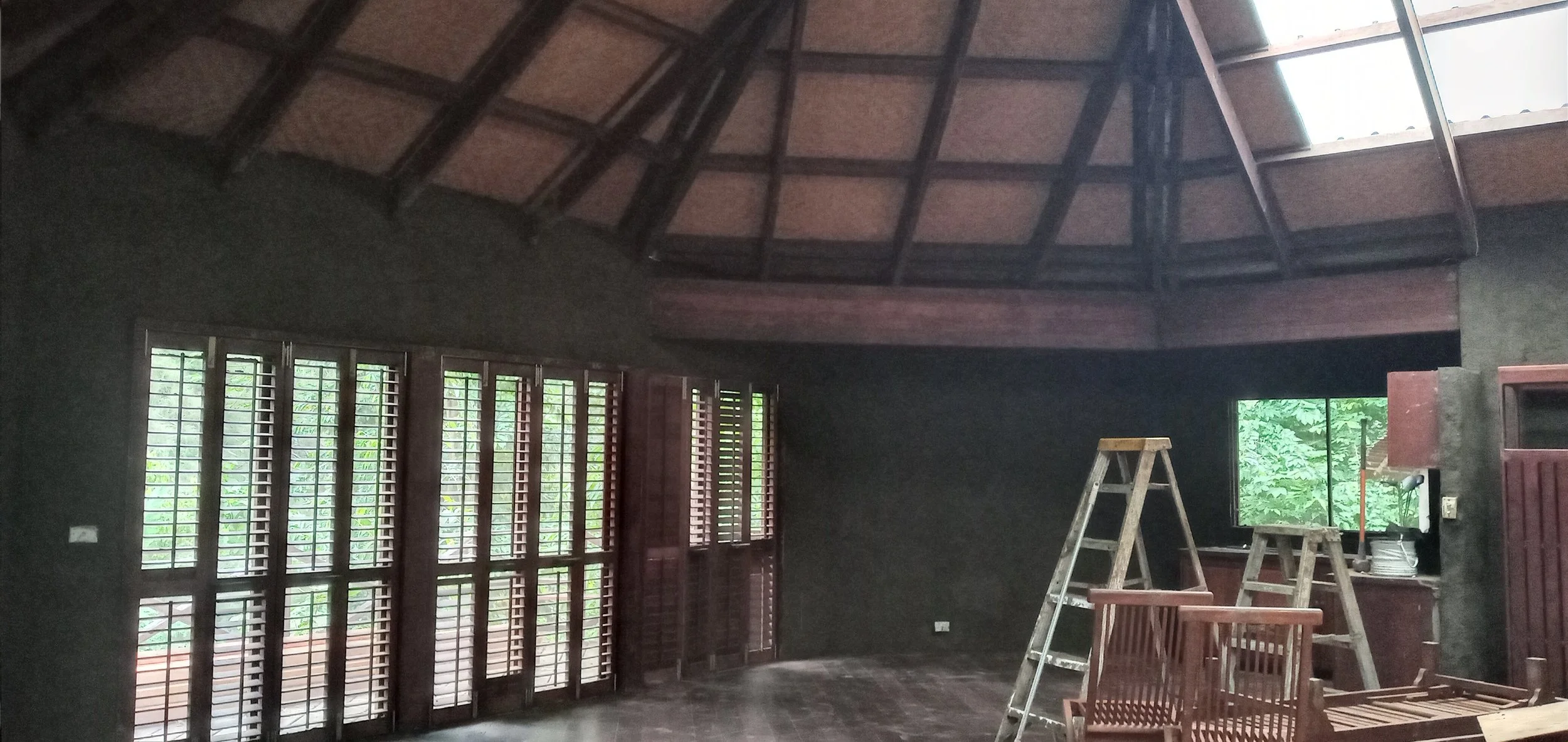
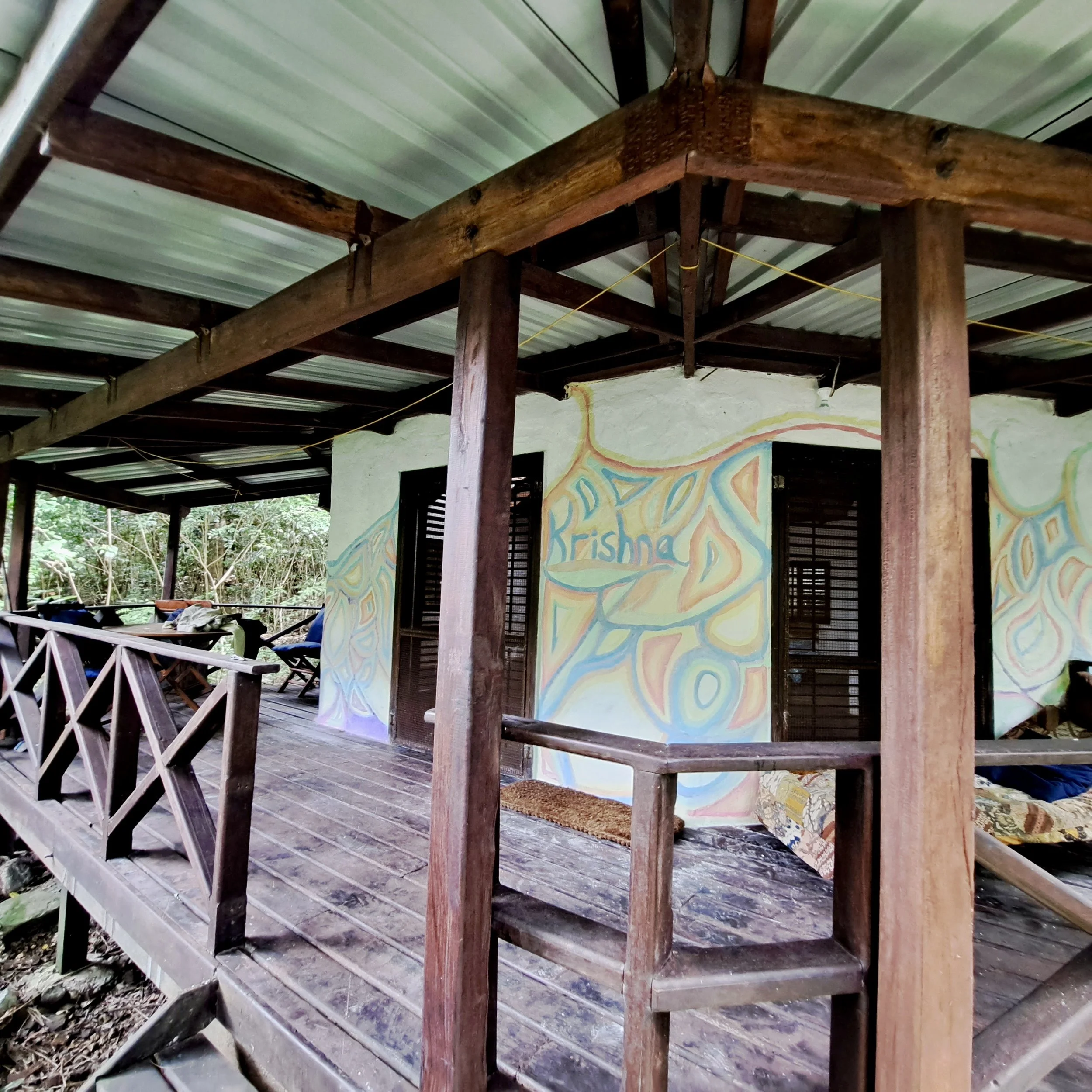
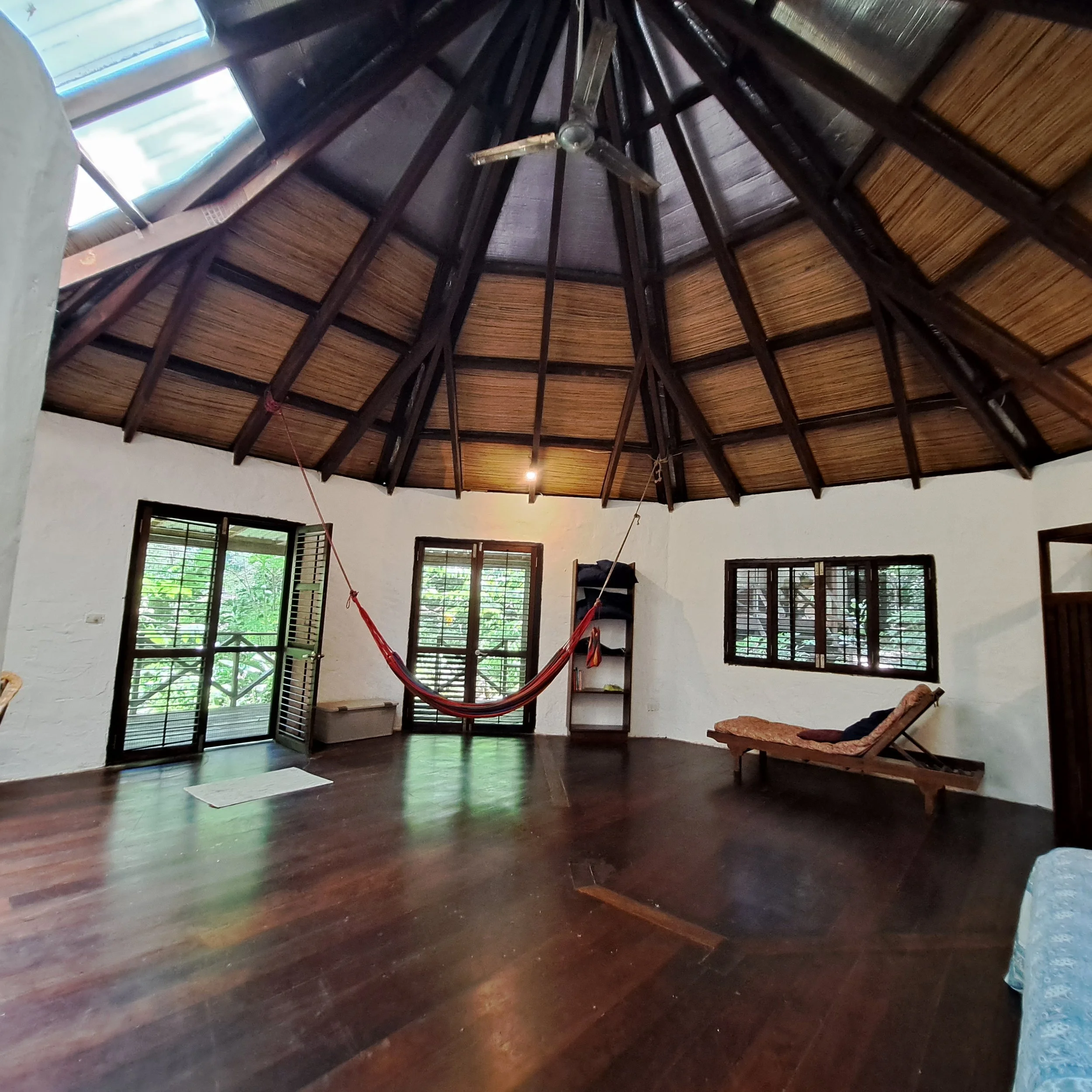
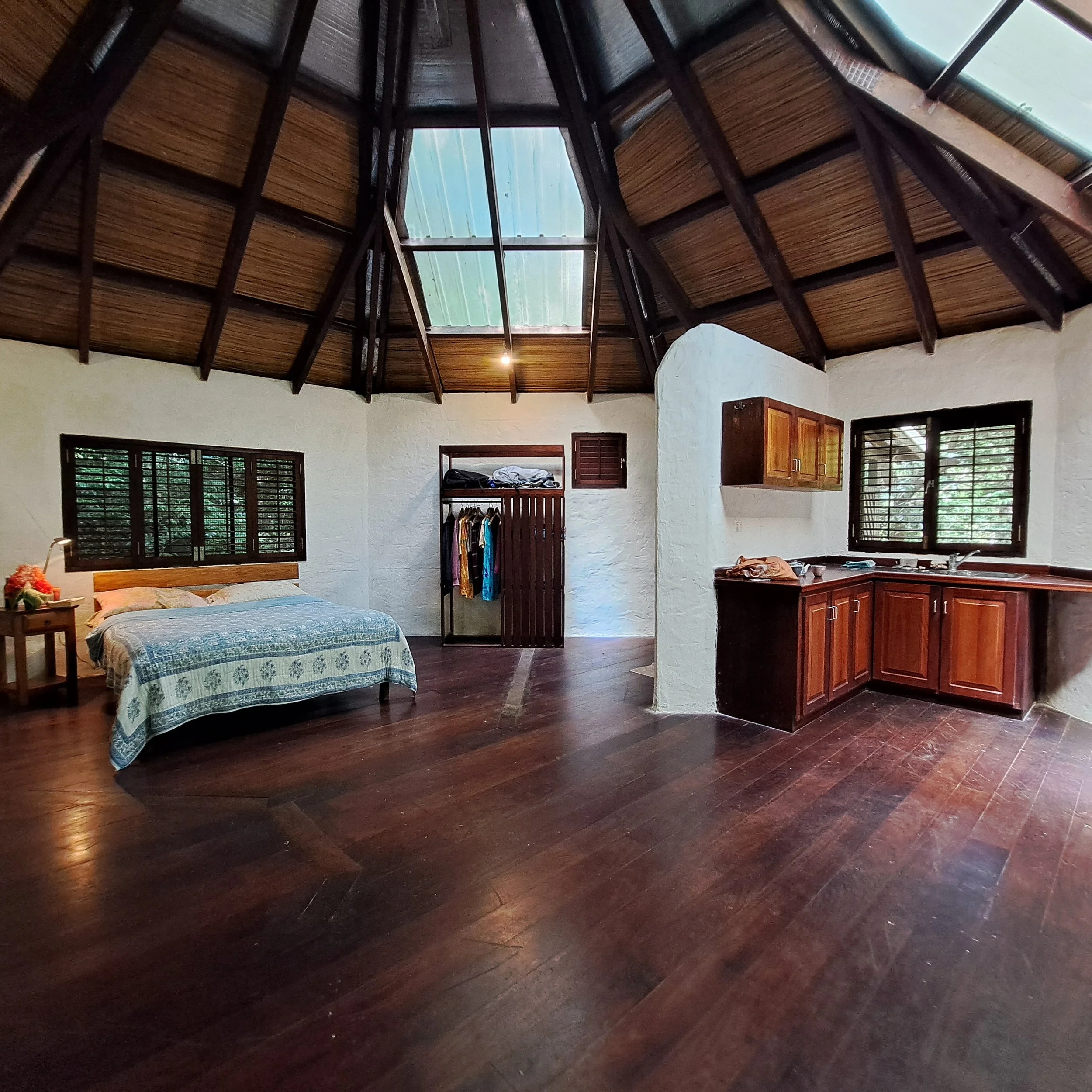
All of the bungalows at Edenhope Nature Preserve are constructed upon raised platforms of locally-harvested hardwood timber. The roofs are weather-resilient aluminum with clear plexiglass panels to permit natural lighting.
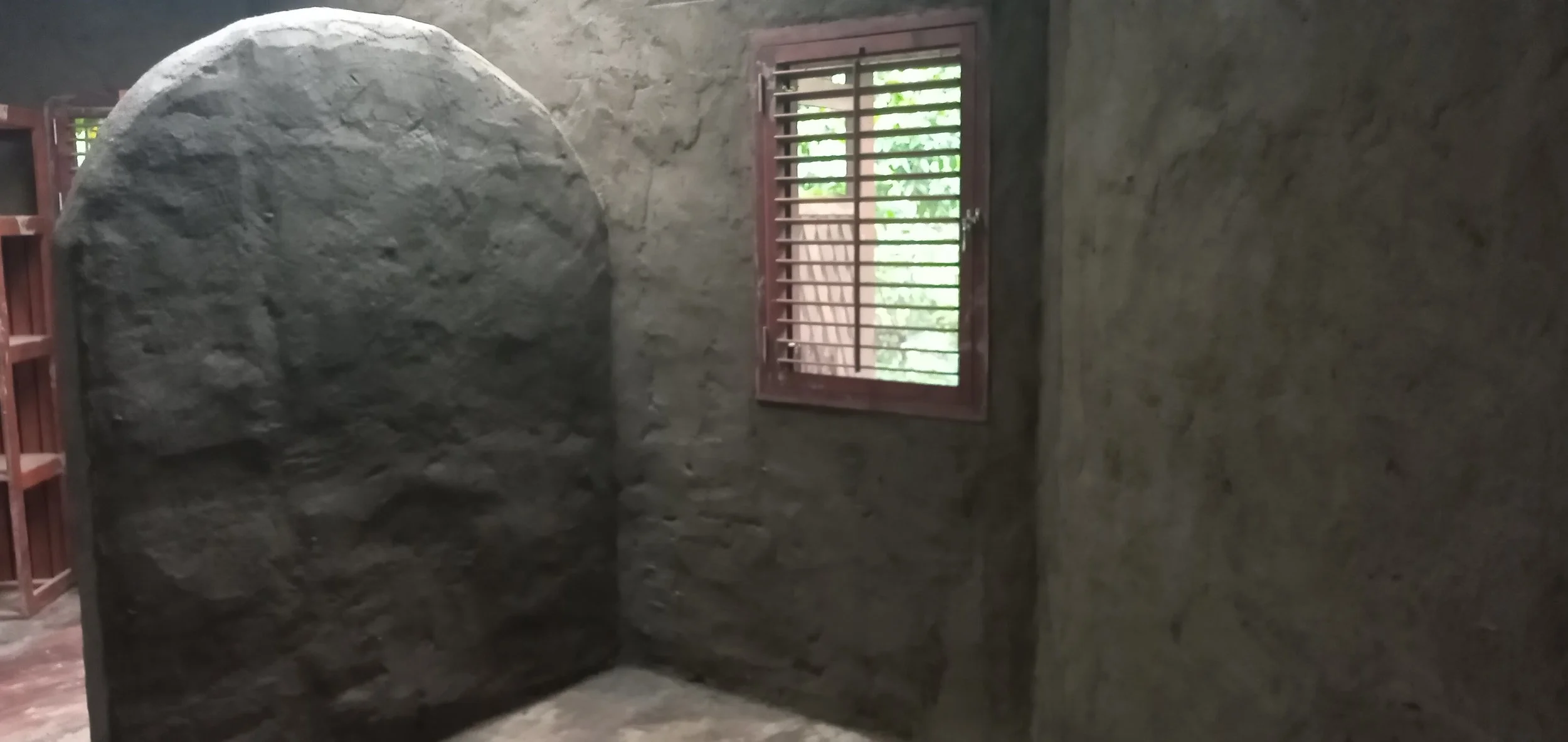
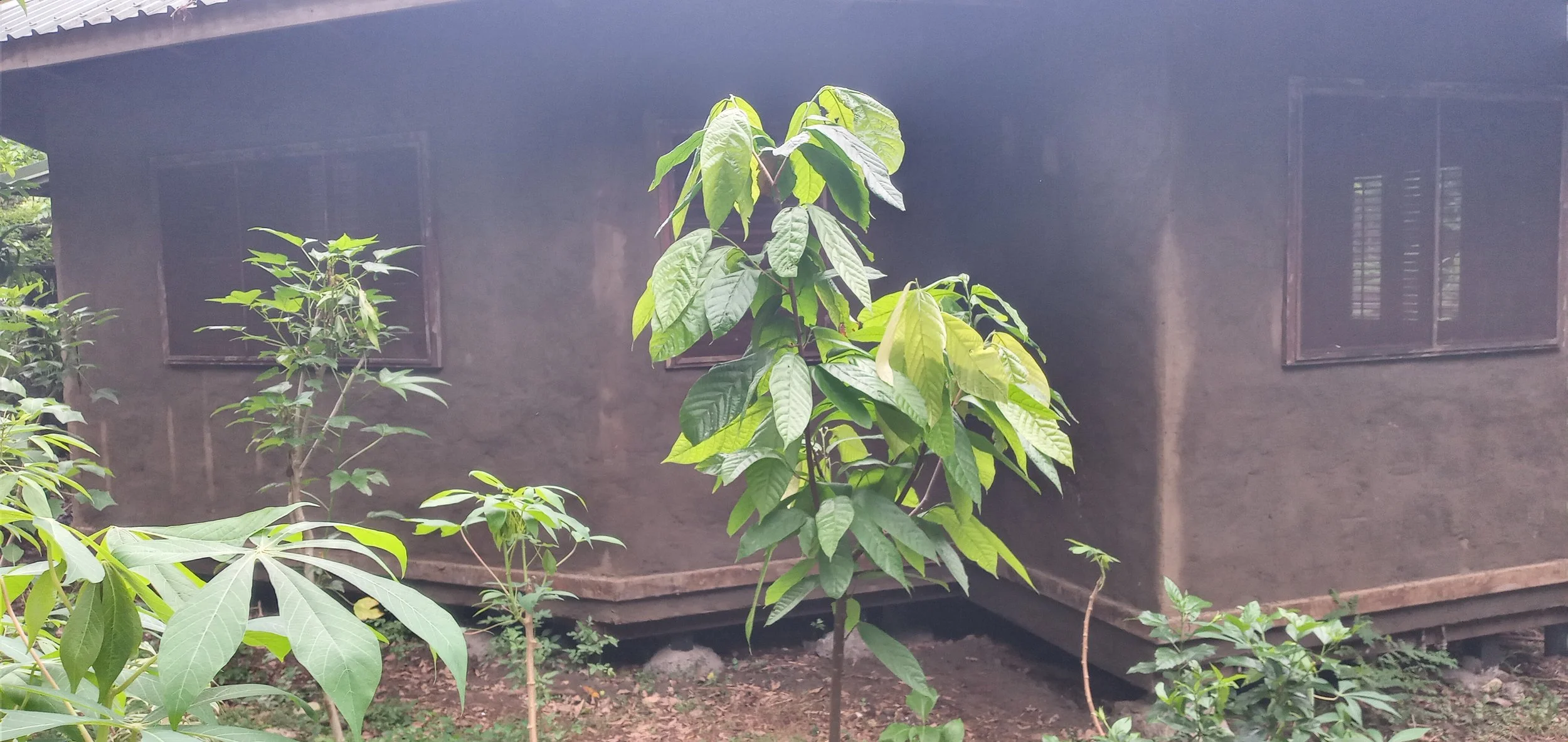
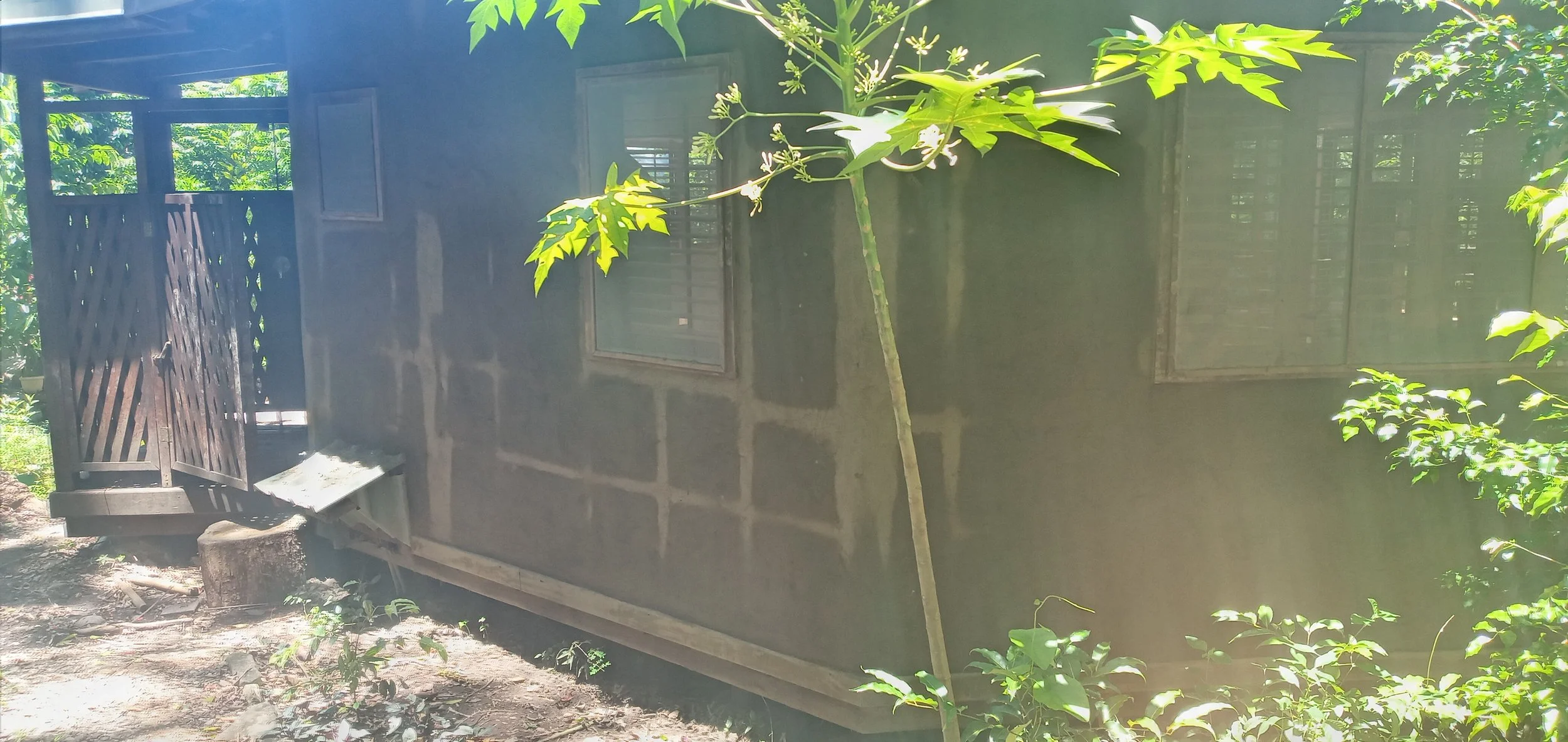
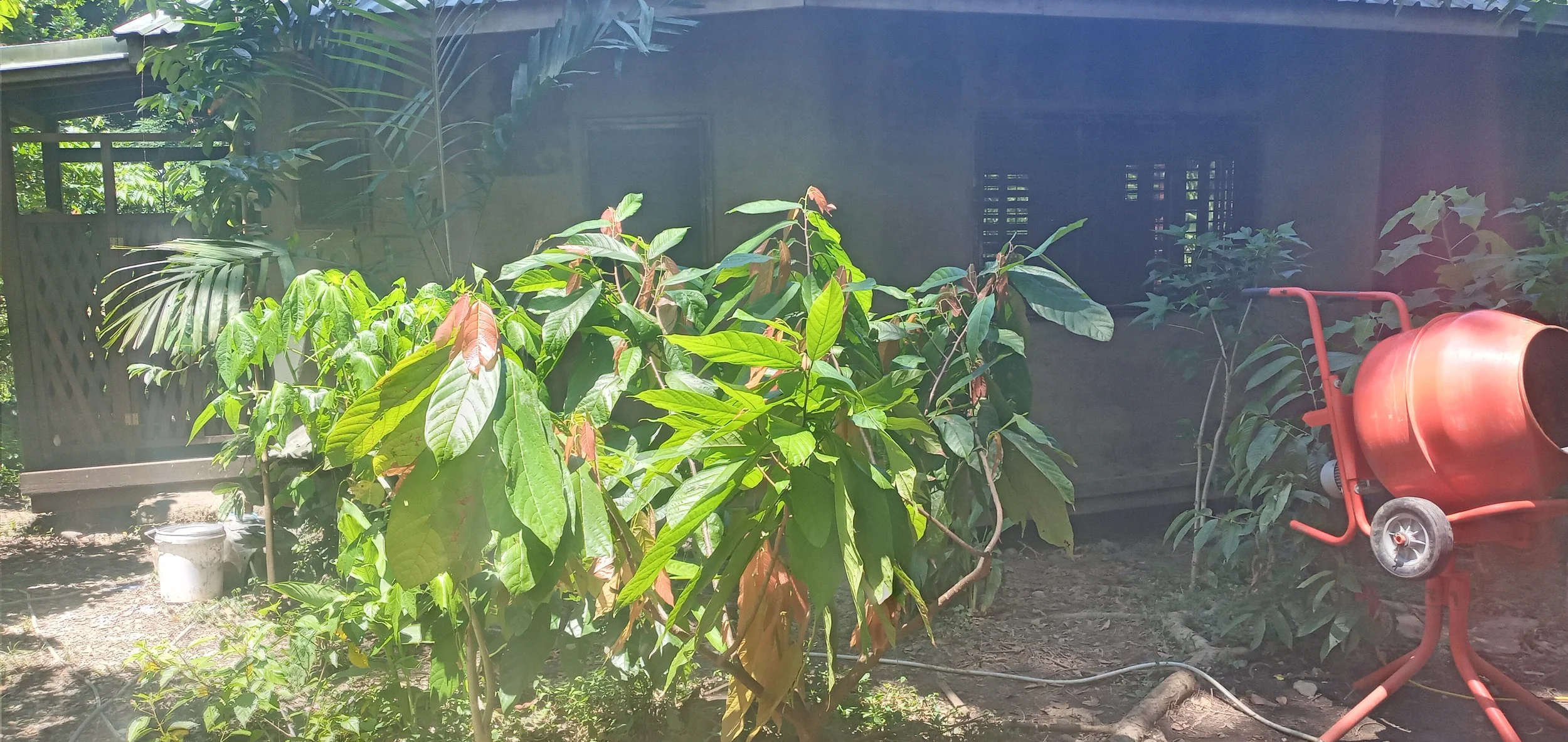
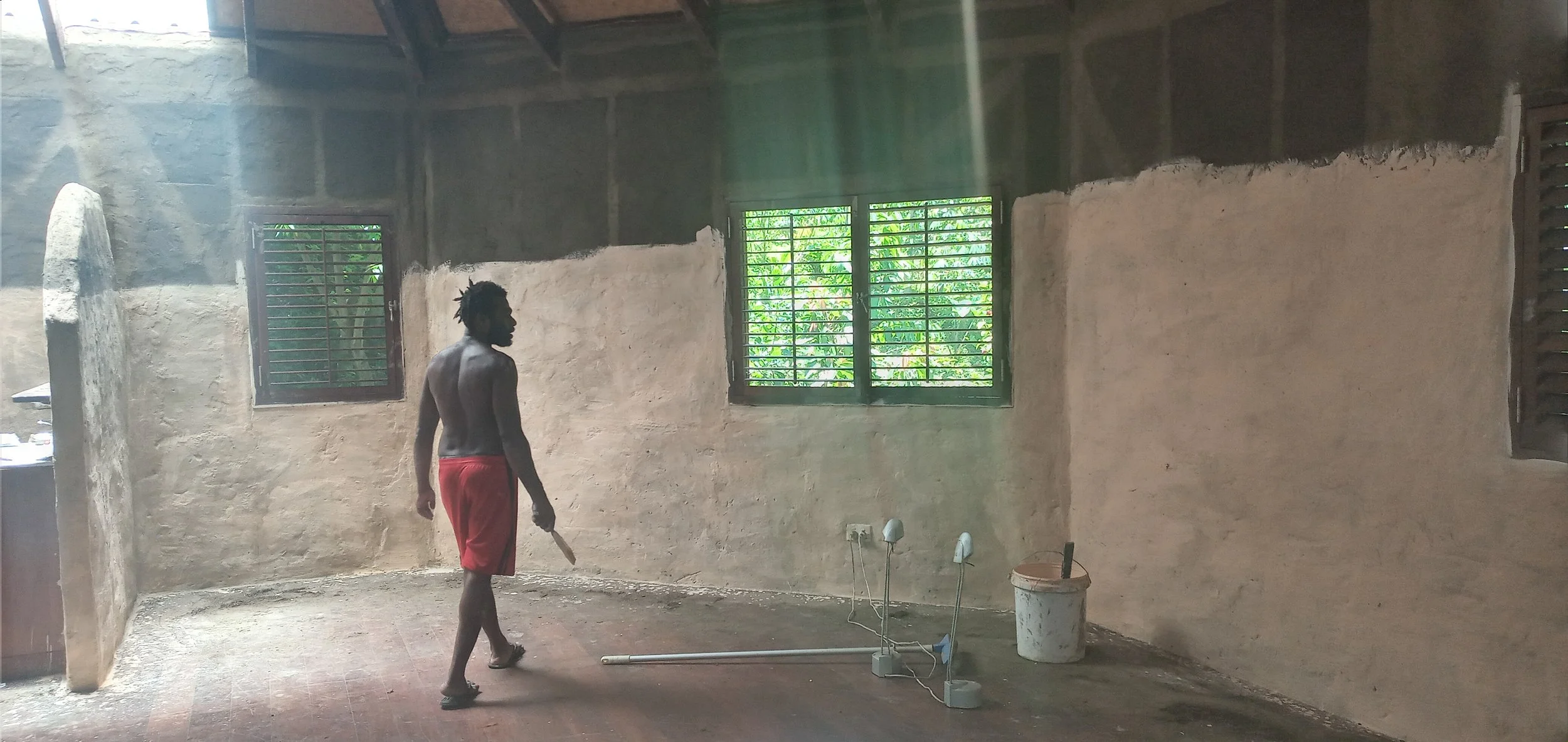
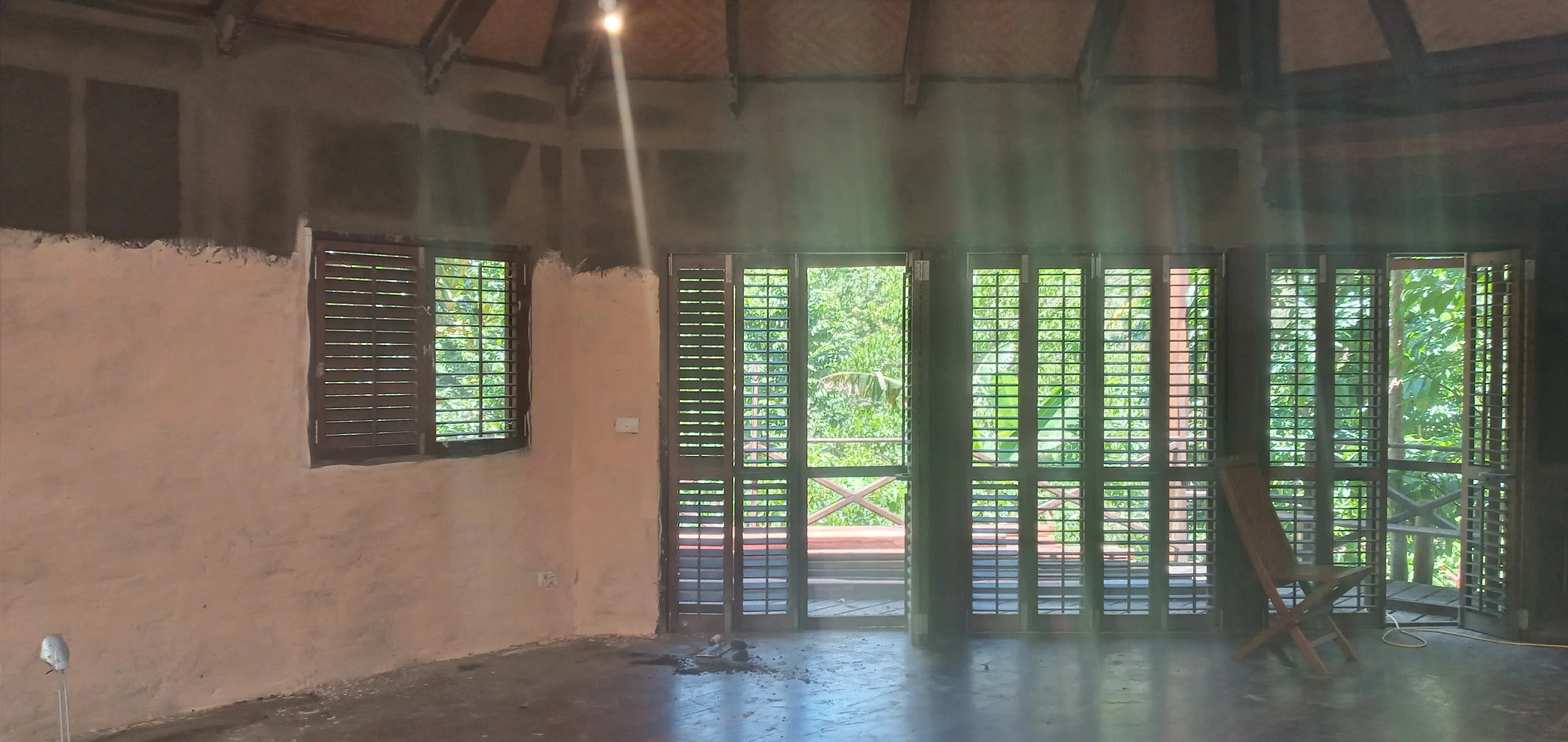
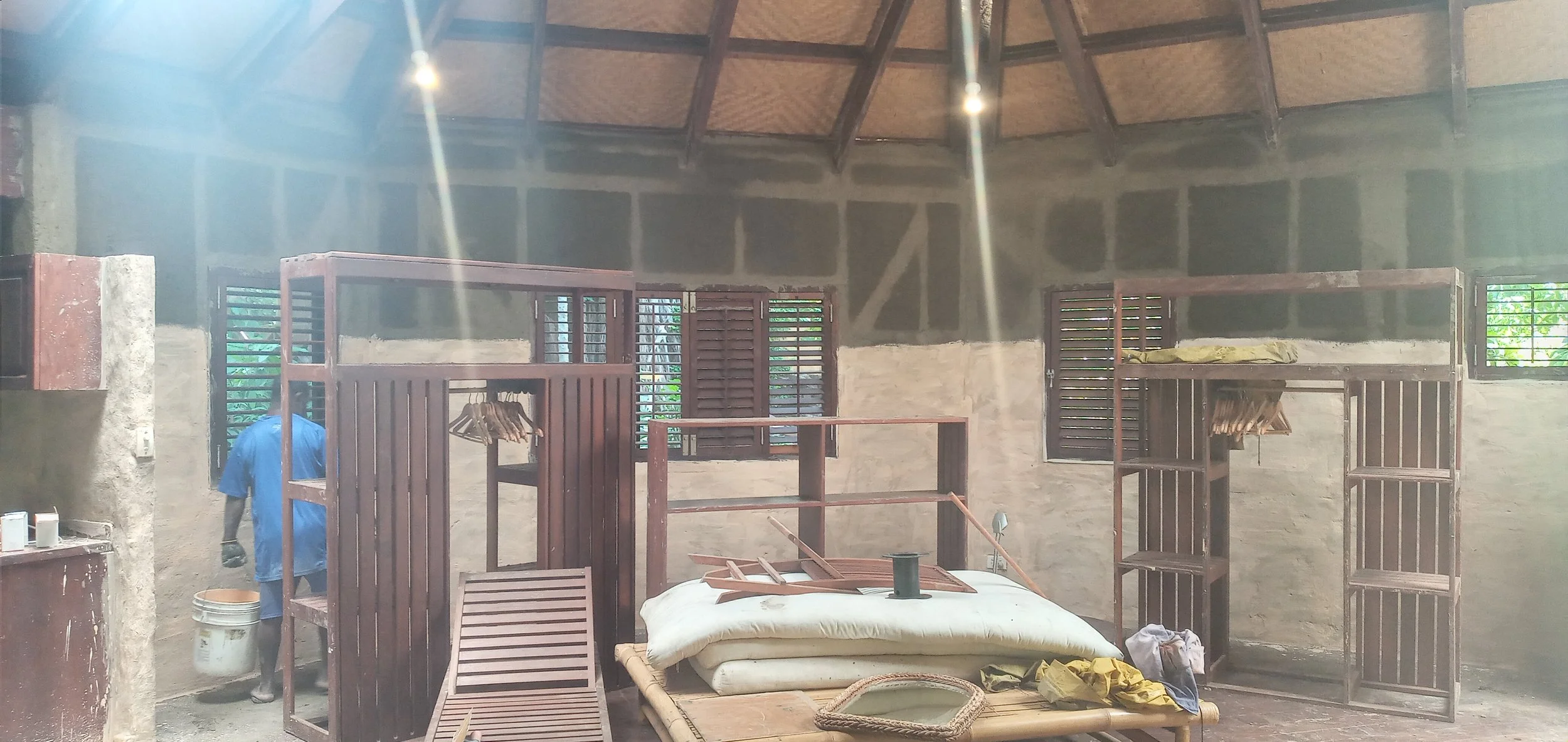
The walls are constructed of earthen materials sourced directly from the land: wild clay mixed with sand from the river and natural plant fibres from the forest comprise the bulk of the cob mixture.
The rendering combines an earthen plaster with a lime finish. These sturdy walls make for great insulation in the humid tropical climate, with louvered timber shutters protecting each bungalow from weather extremes.
Below are some snapshots we took in 2021-2022 during the construction of the earthen walls.
↠ water ↞
The water that runs through our taps is fed directly from a mountain spring; it is high in calcium and other natural minerals, totally pure and healthy for drinking.
The water source is located more than a kilometer up the mountainside and is gravity-fed down into the ecovillage through a long pipe.
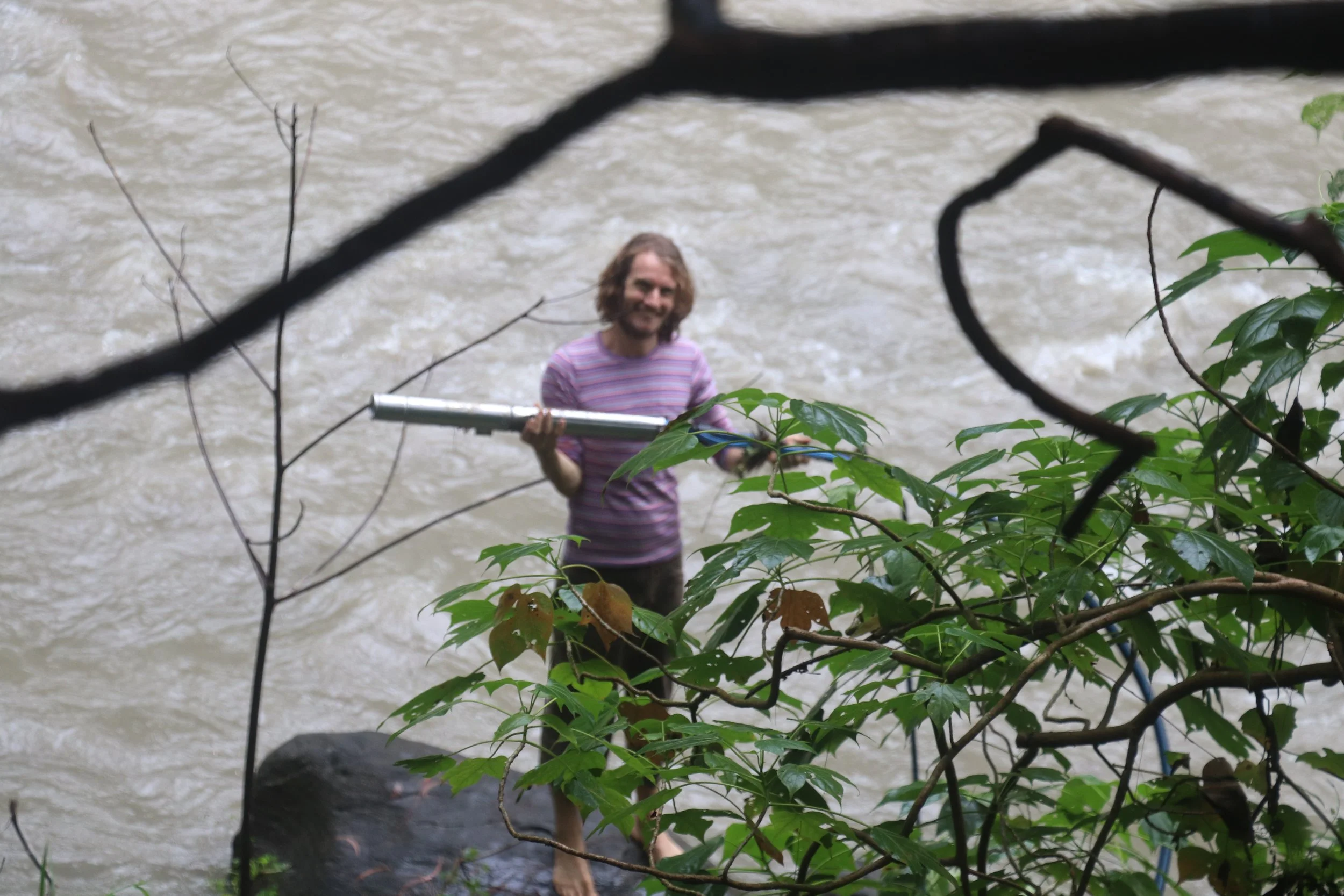
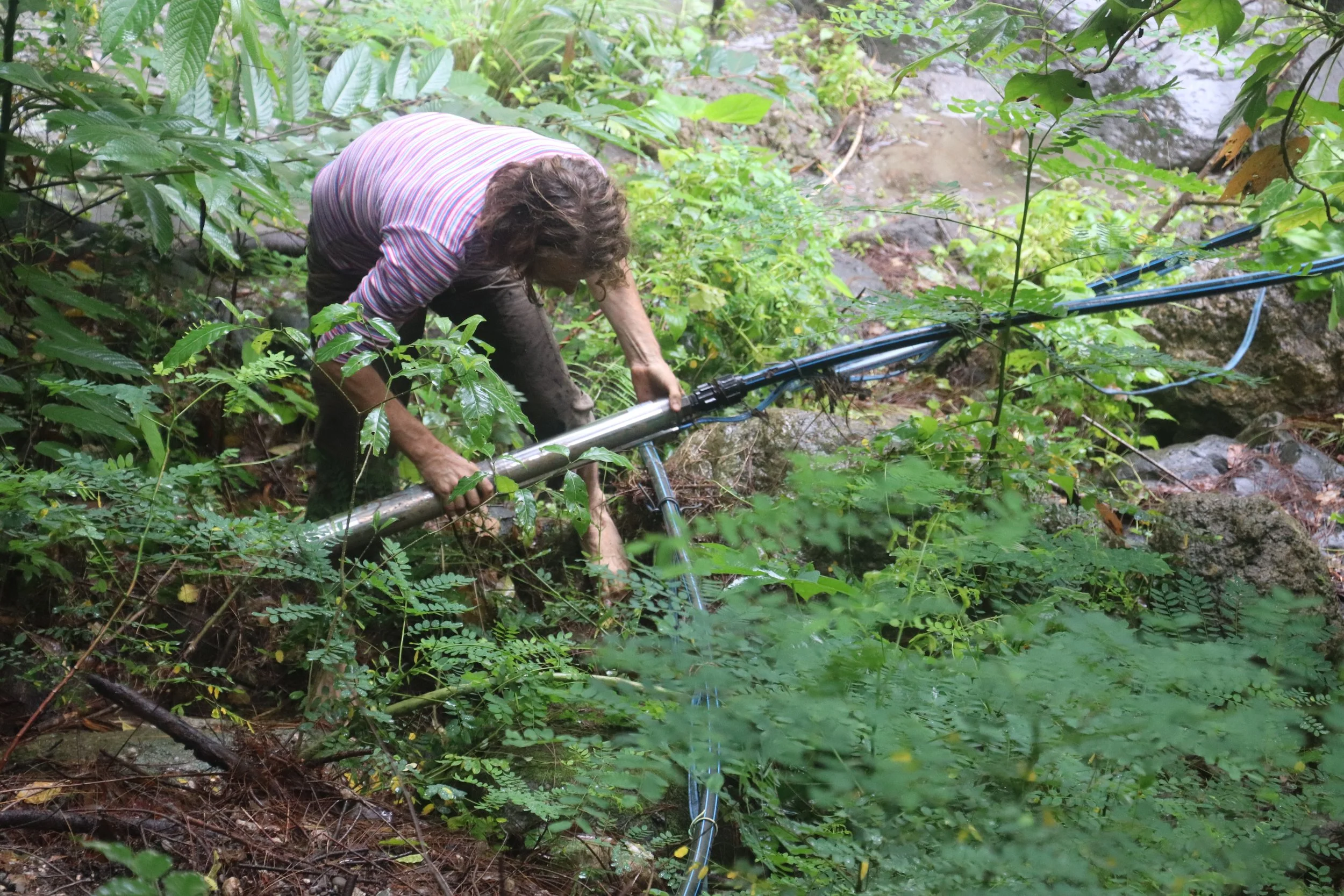
The water is channeled at high pressure to create a source of hydroelectric power for the ecovillage, whilst also feeding into the garden irrigation system and the taps that are fitted throughout the ecovillage.
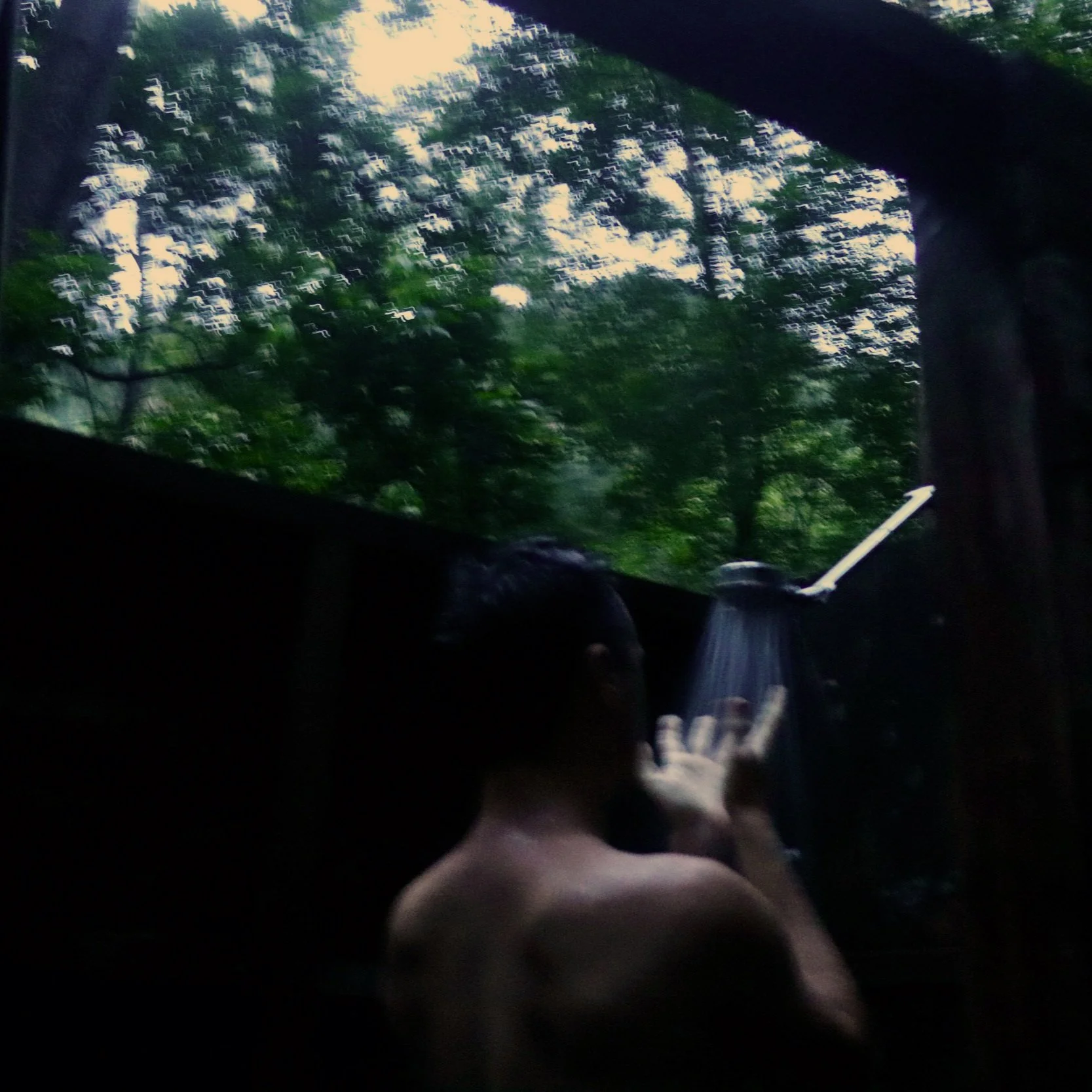
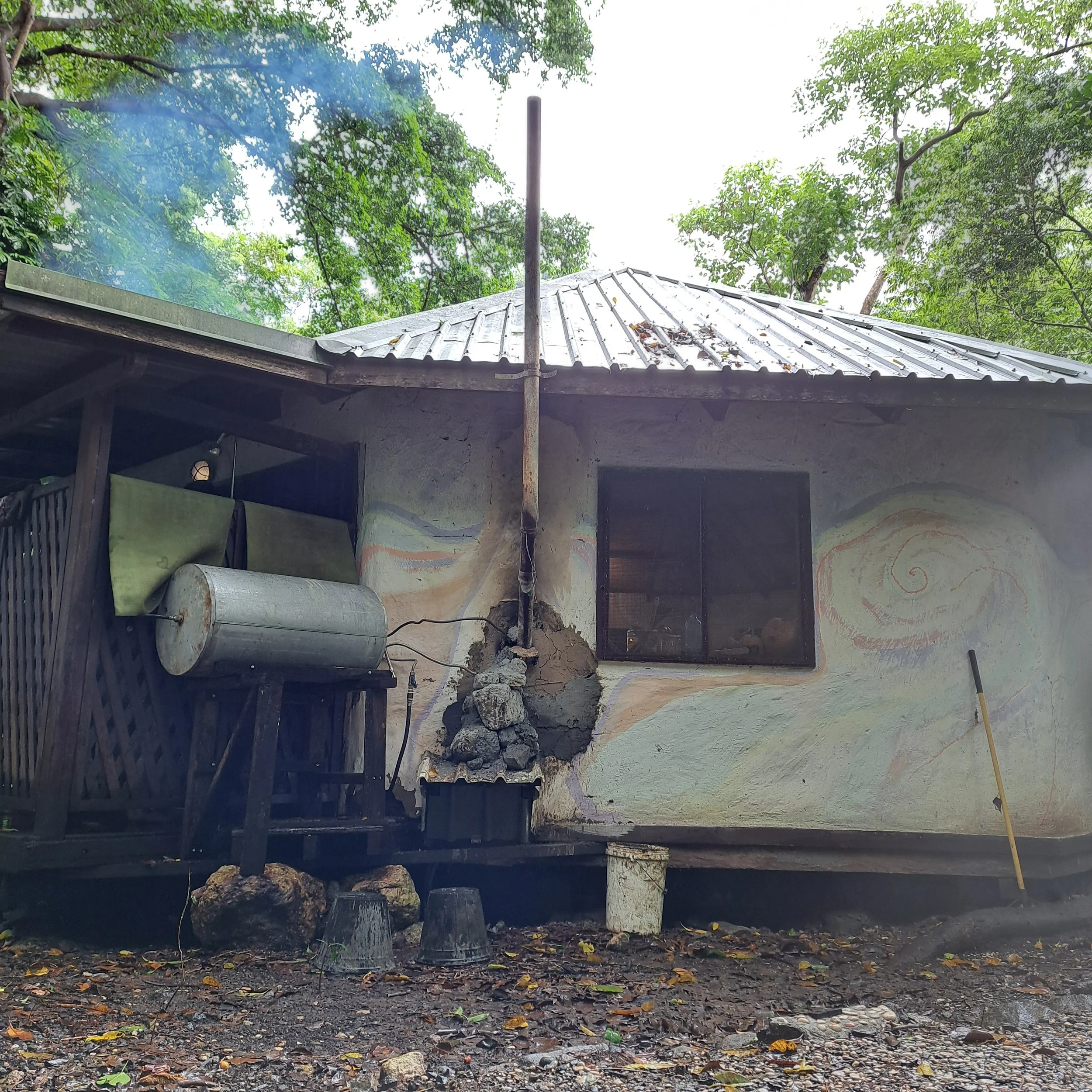
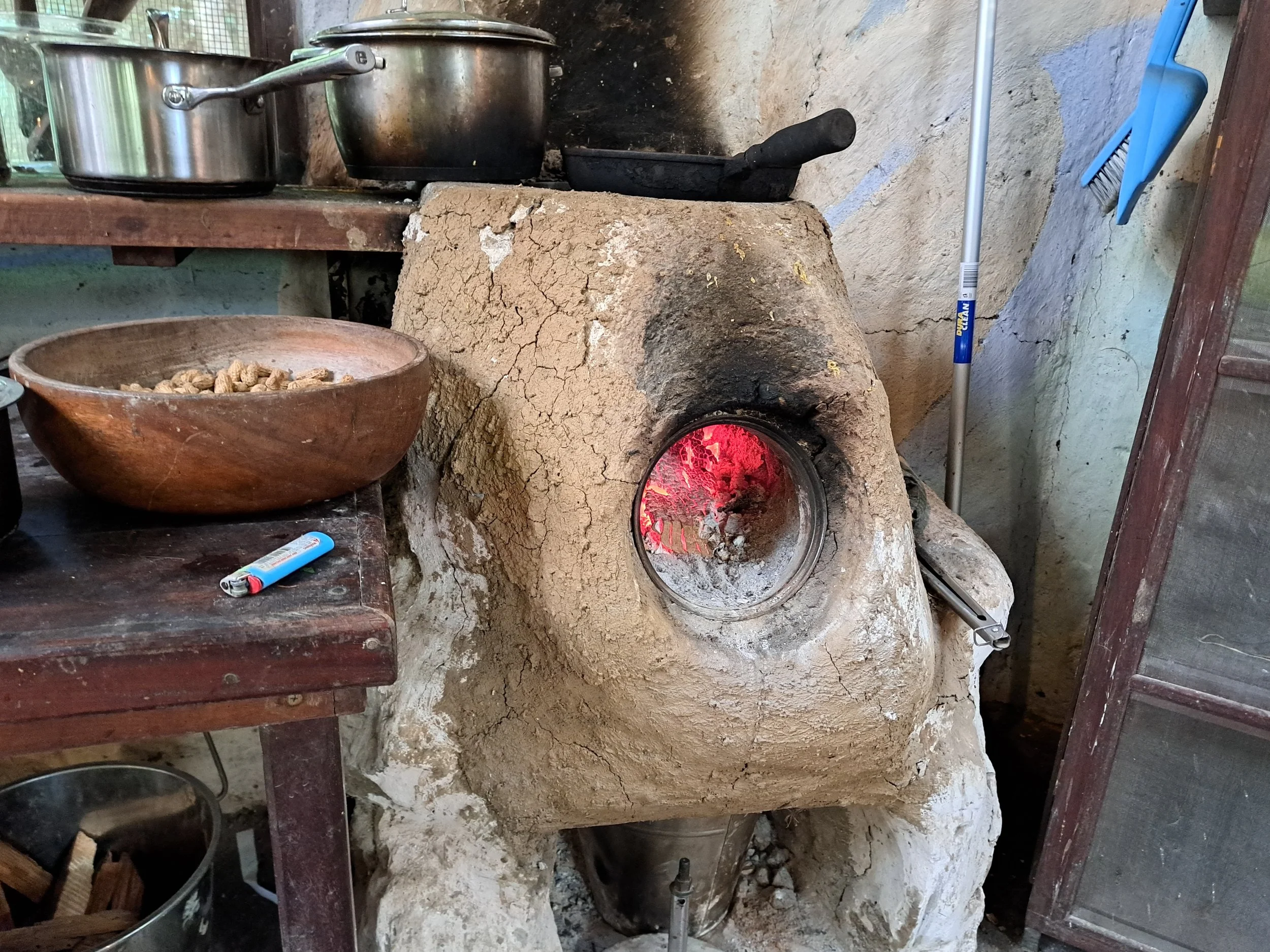
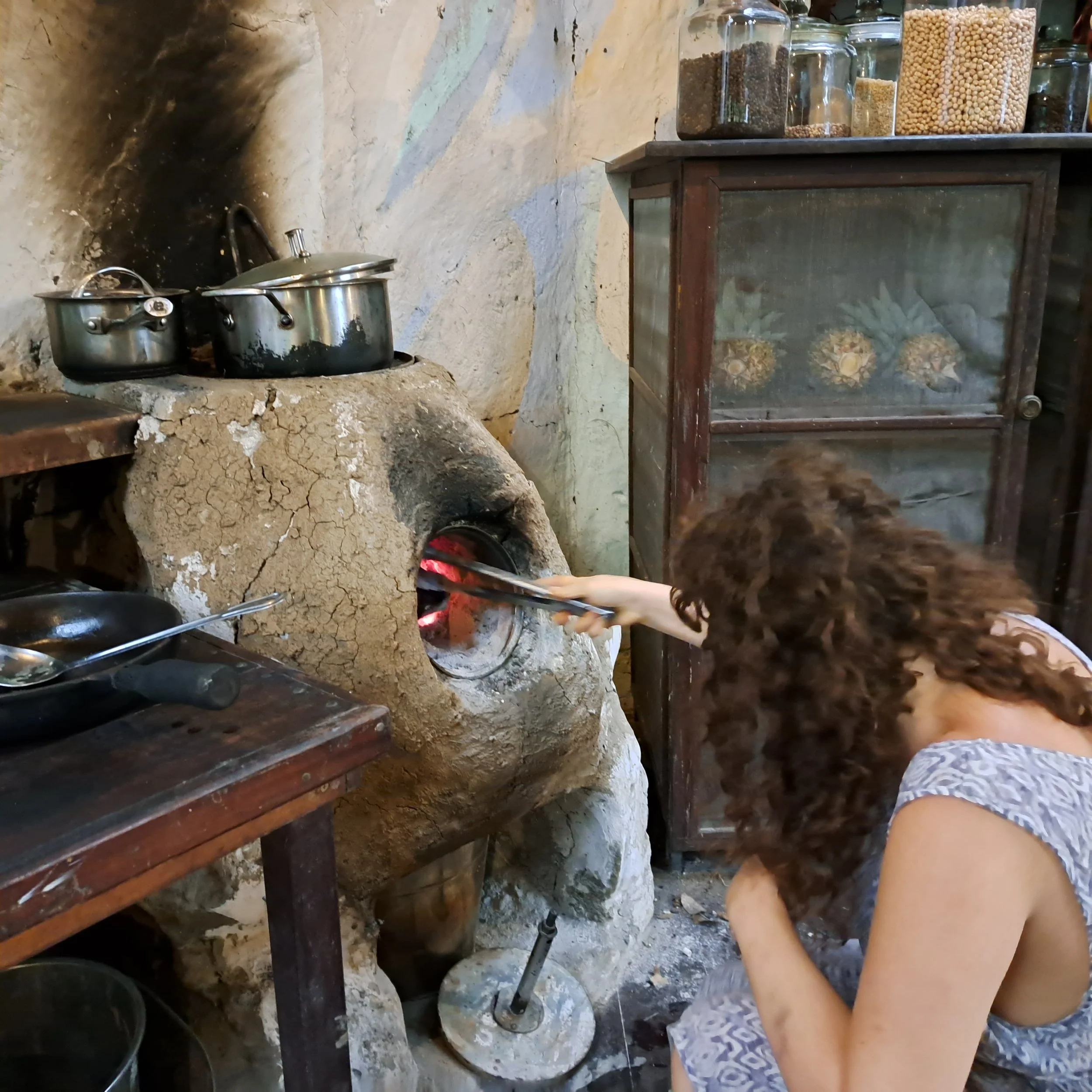
We heat water using fire-powered rocket stoves. The stove on which we cook our meals creates hot water for showers and washing up, and a second hot-water system is in place that simultaneously heats our sauna.
-
![]()
River pump
-
![]()
River pump
-
![]()
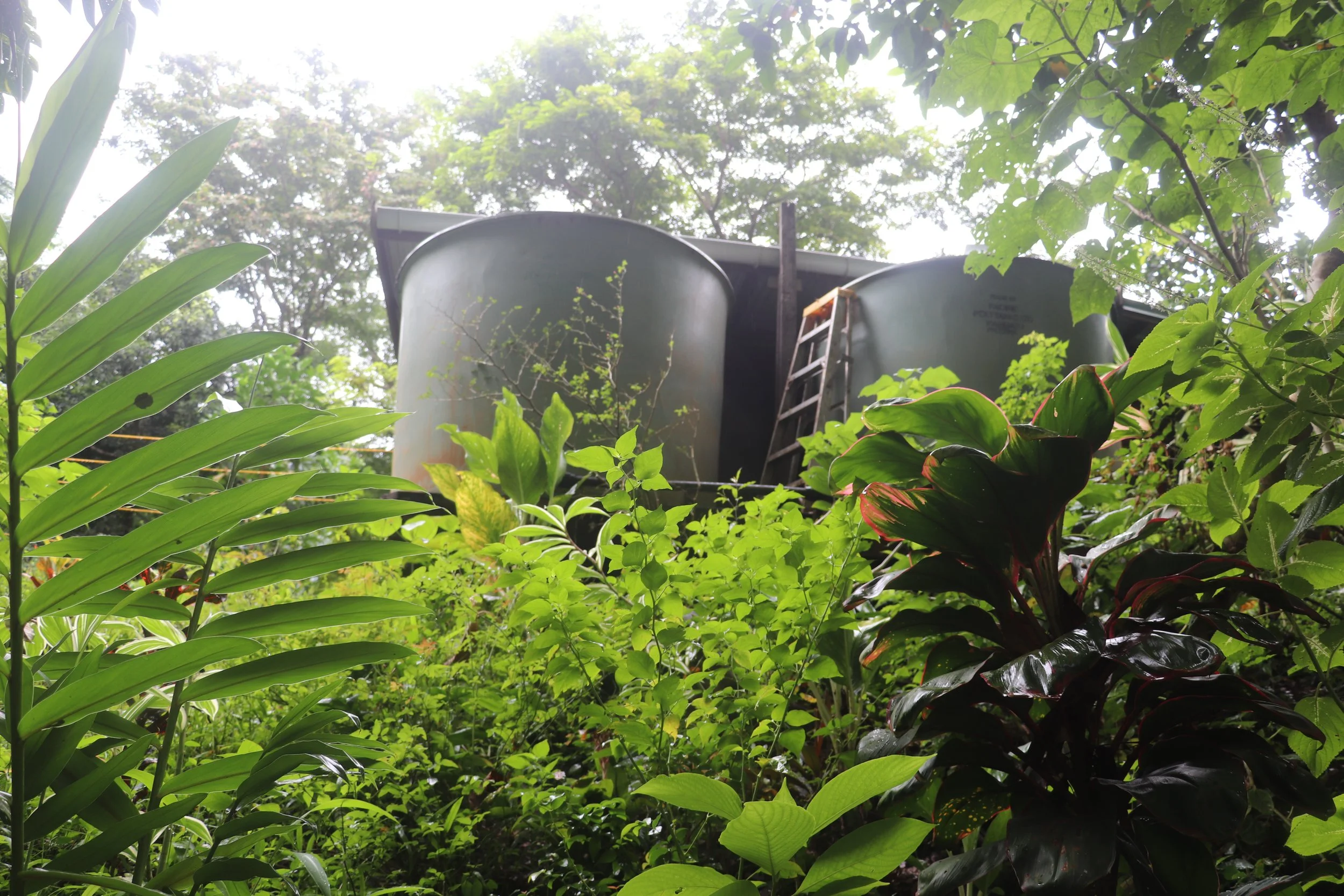
Rain water tanks
-
![]()
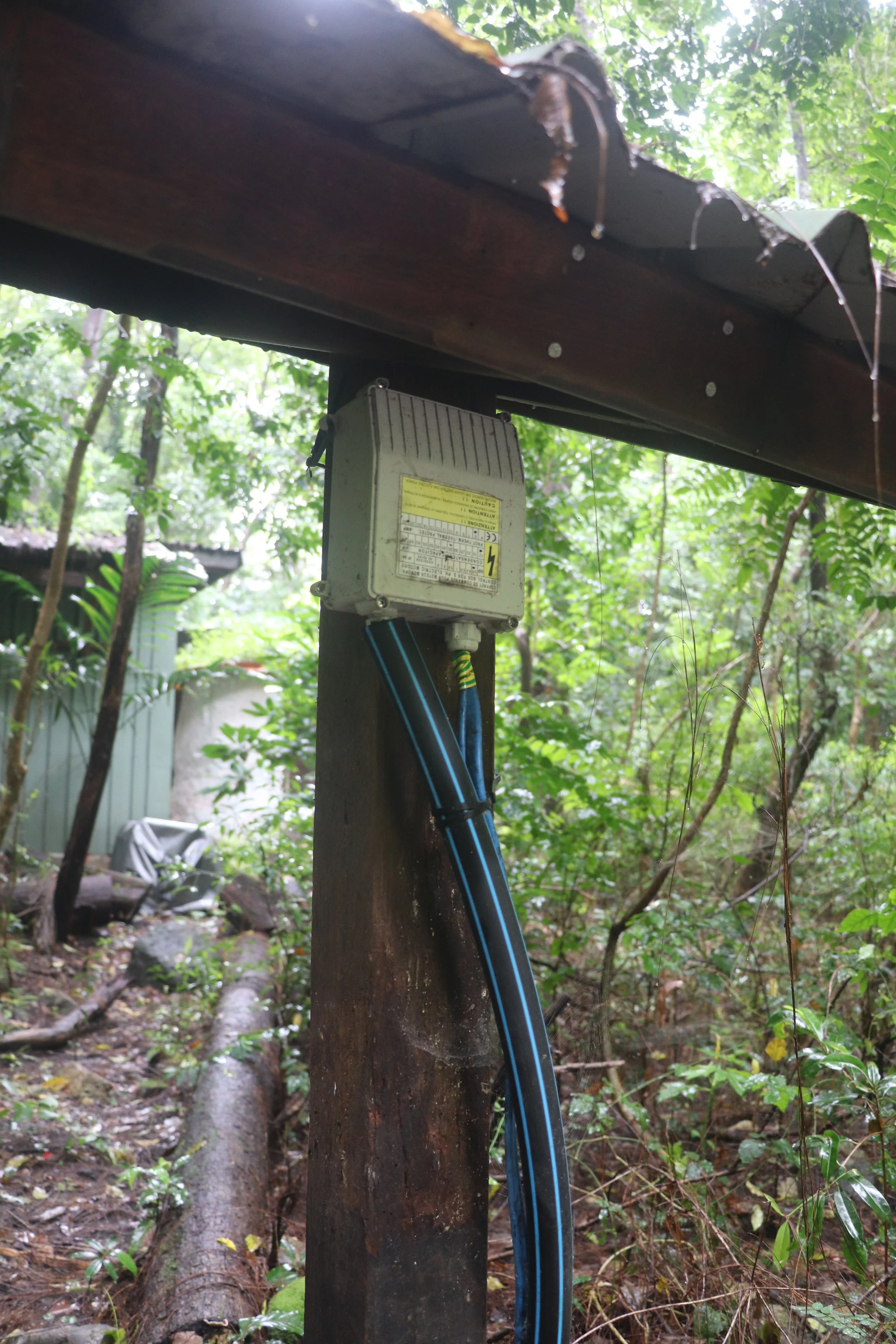
Water pumper
-
![]()
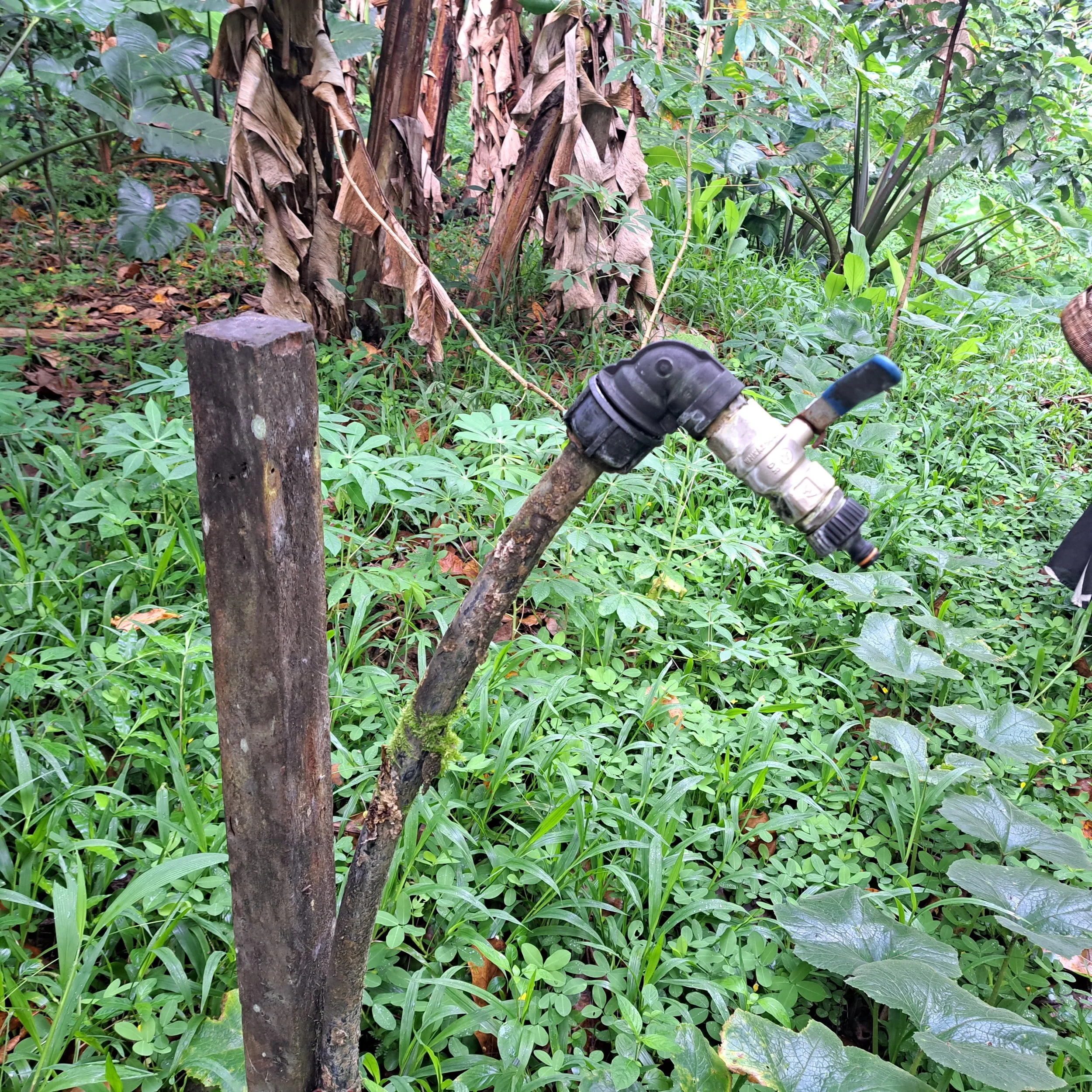
Water taps for gardening irrigation
-
![]()
Hot Water system powered by our fire stove
-
![]()
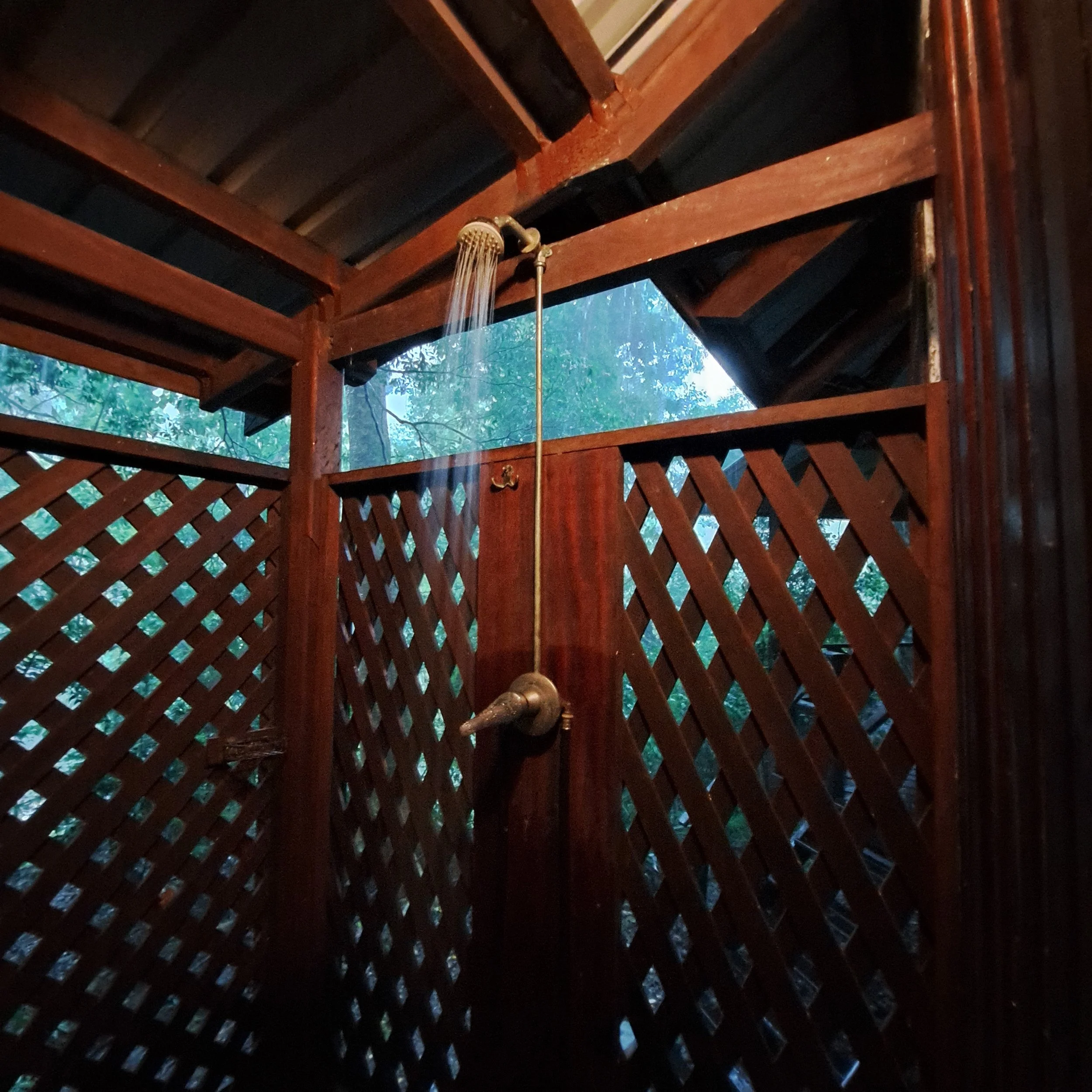
Showers inside bungalows
-
![]()
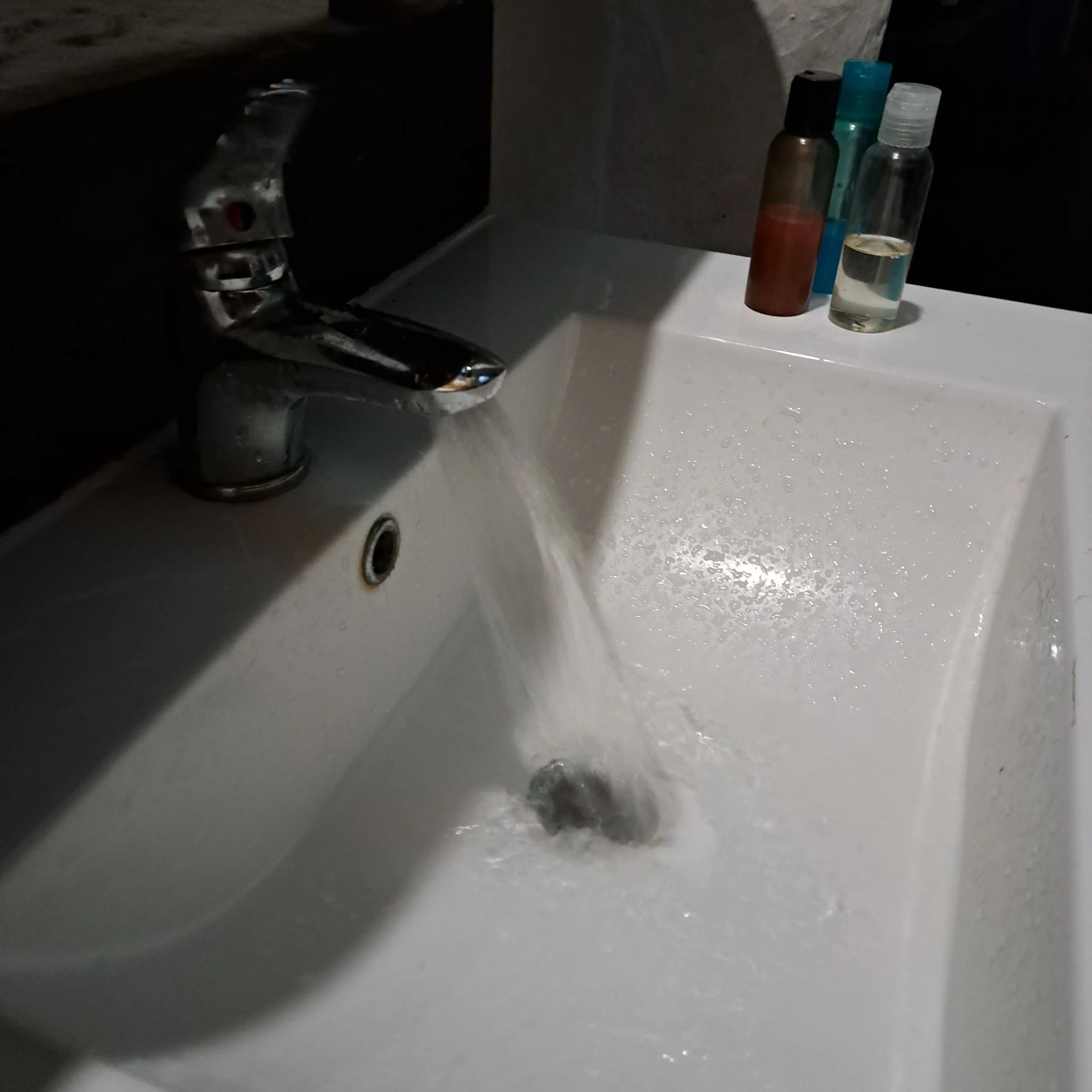
Water runs in our indoor taps are drinkable
↠ power ↞
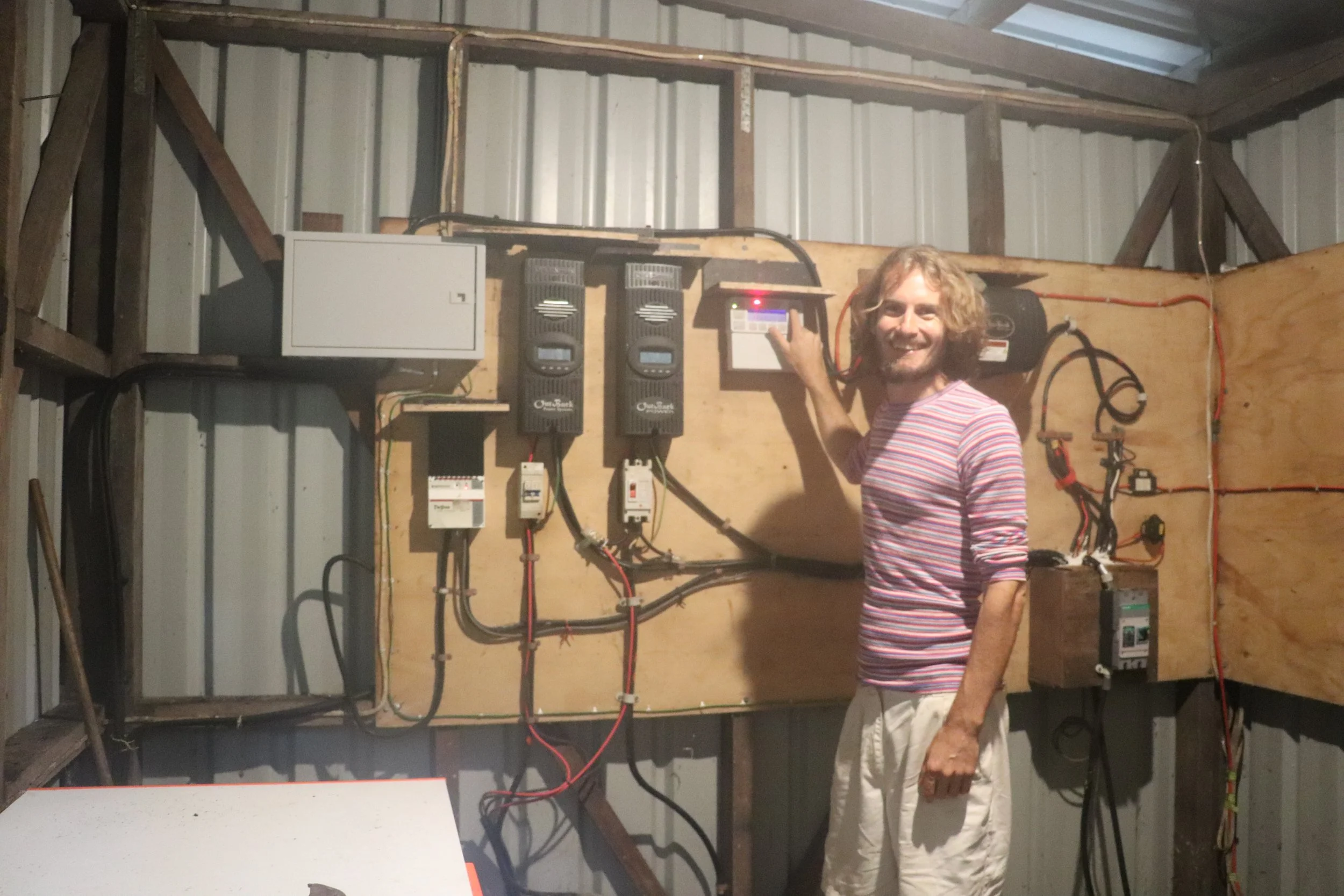
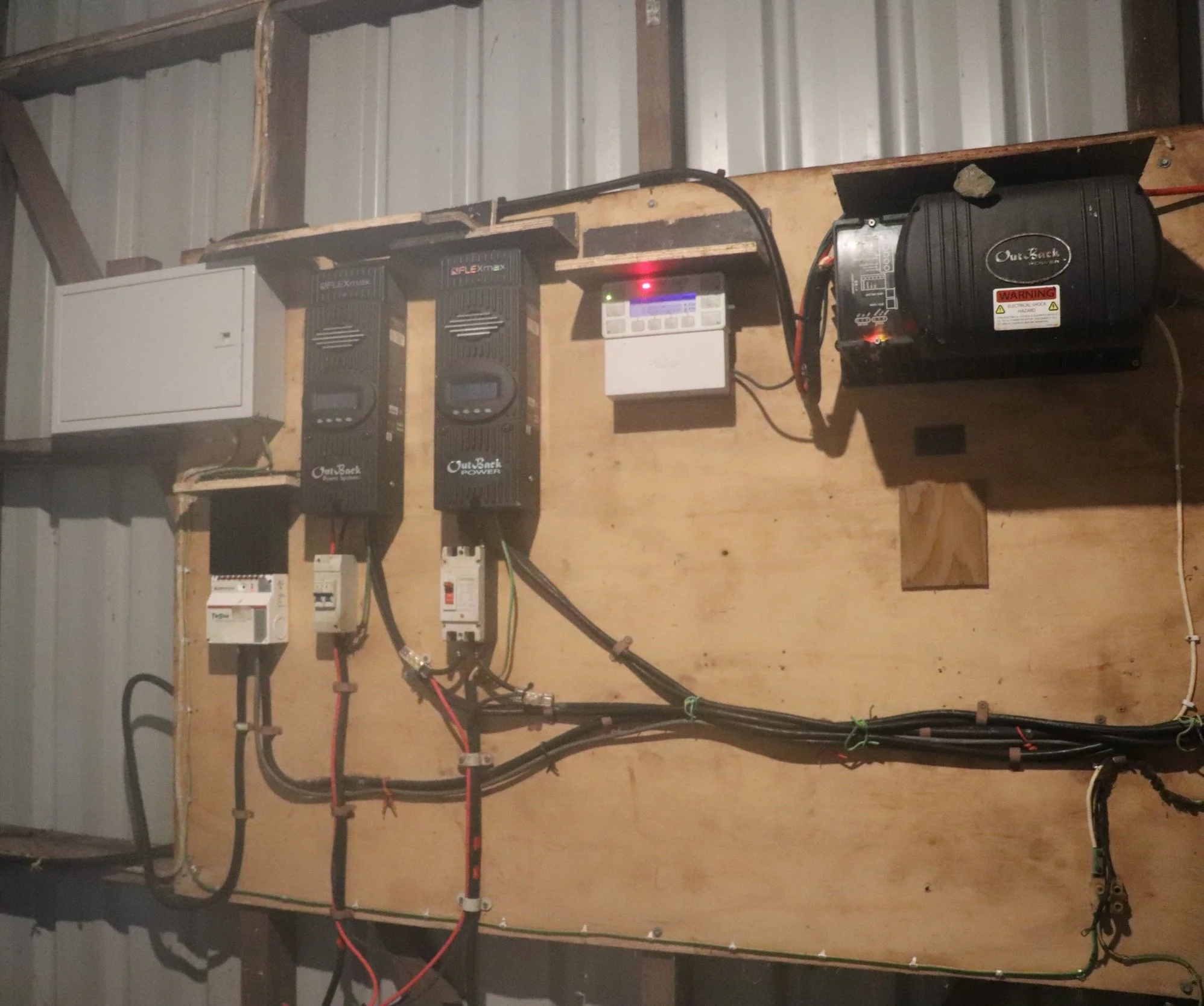
Maintaining a stable off-grid power supply for the entire ecovillage requires significant infrastructure and careful maintenance We run a 24v combined solar/hydro power system, which is housed in a purpose-built powerhouse.
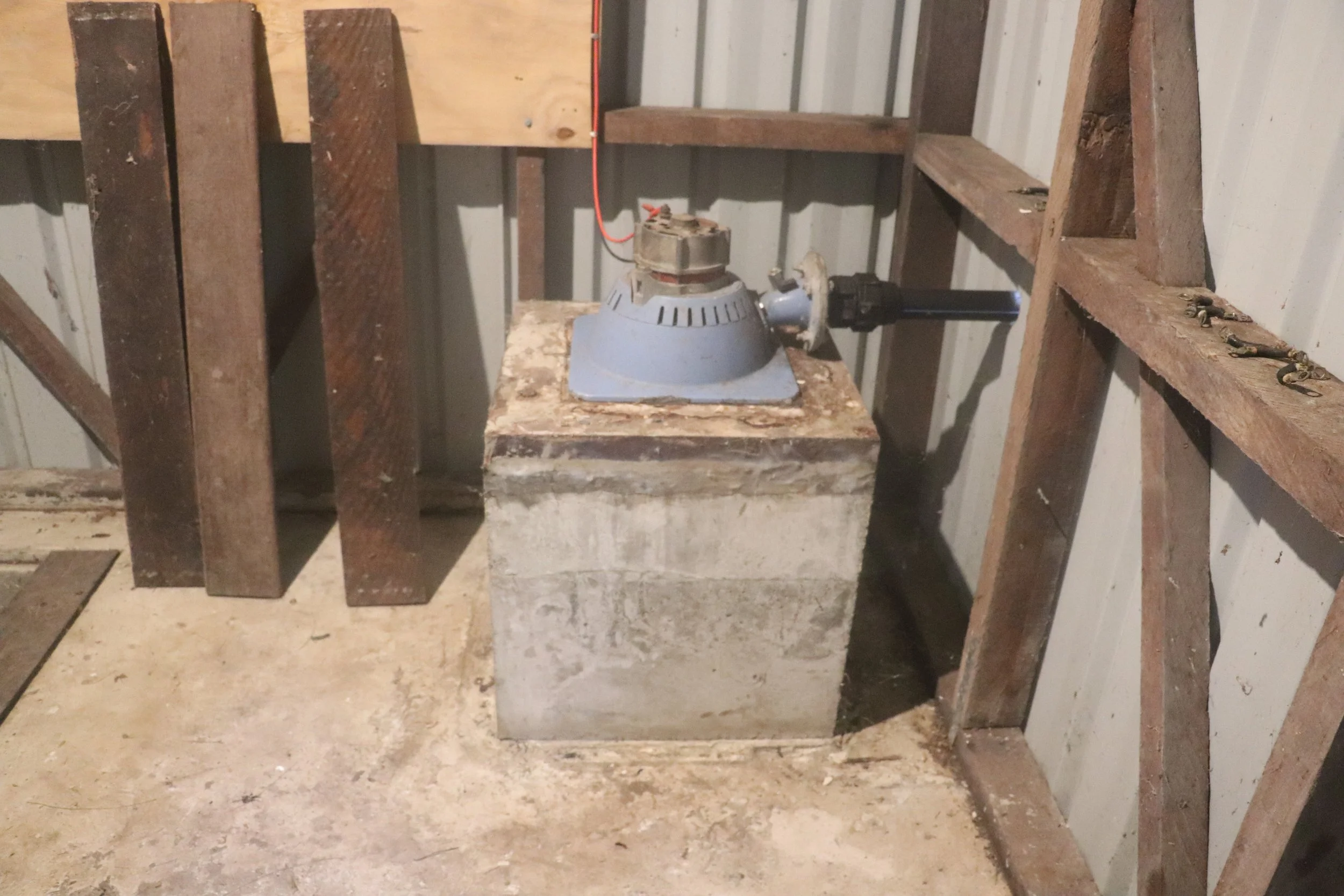
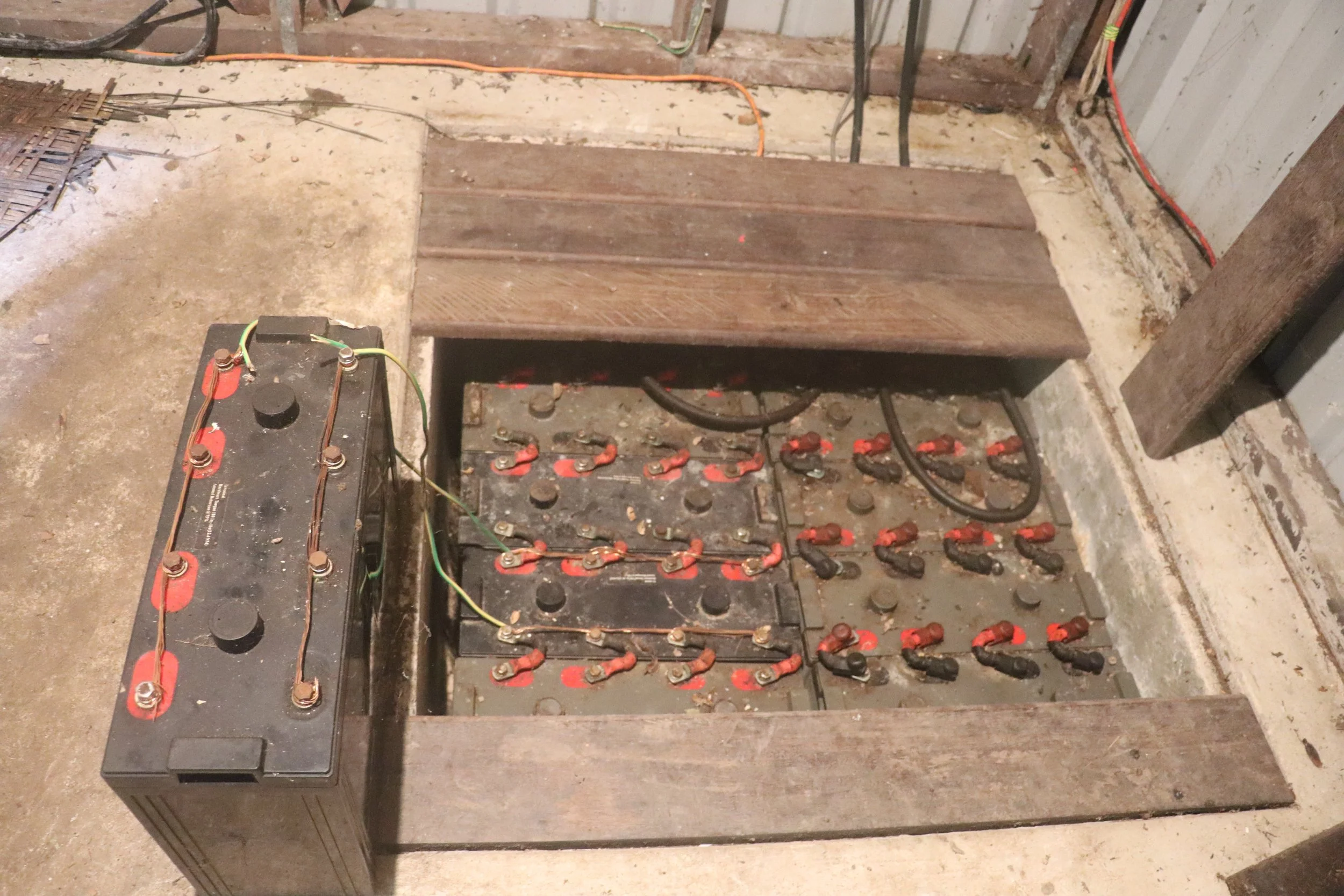
The powerhouse comprises two FlexMax 80 charge controllers and a 3000kw Outback inverter, a bank of forty 1.2v nickel iron batteries, a hydro turbine, and a charge controller wired to a offload extra power into a hot water system for community showers. We also have a D/C chest freezer installed to maximize food storage with excess power.
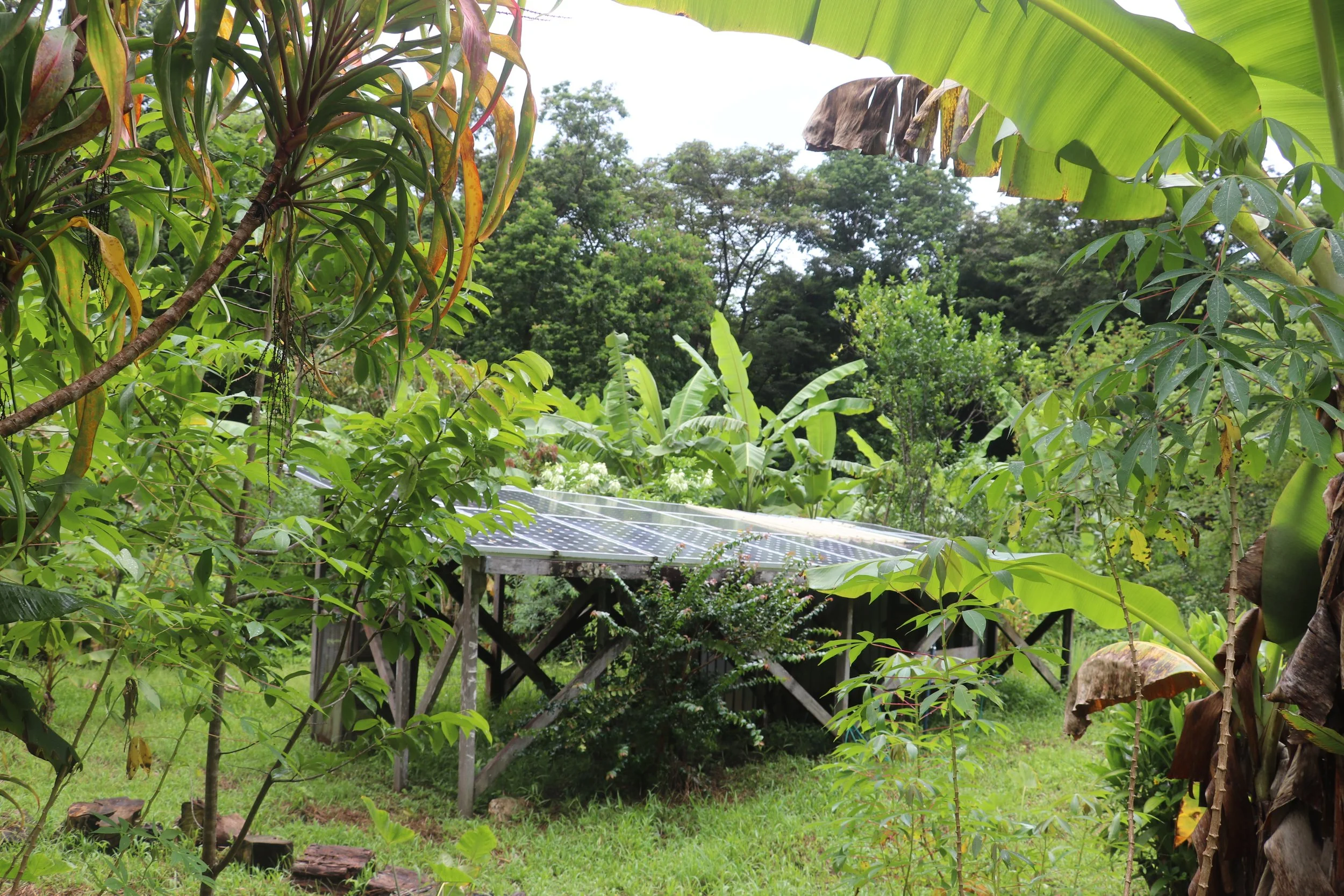
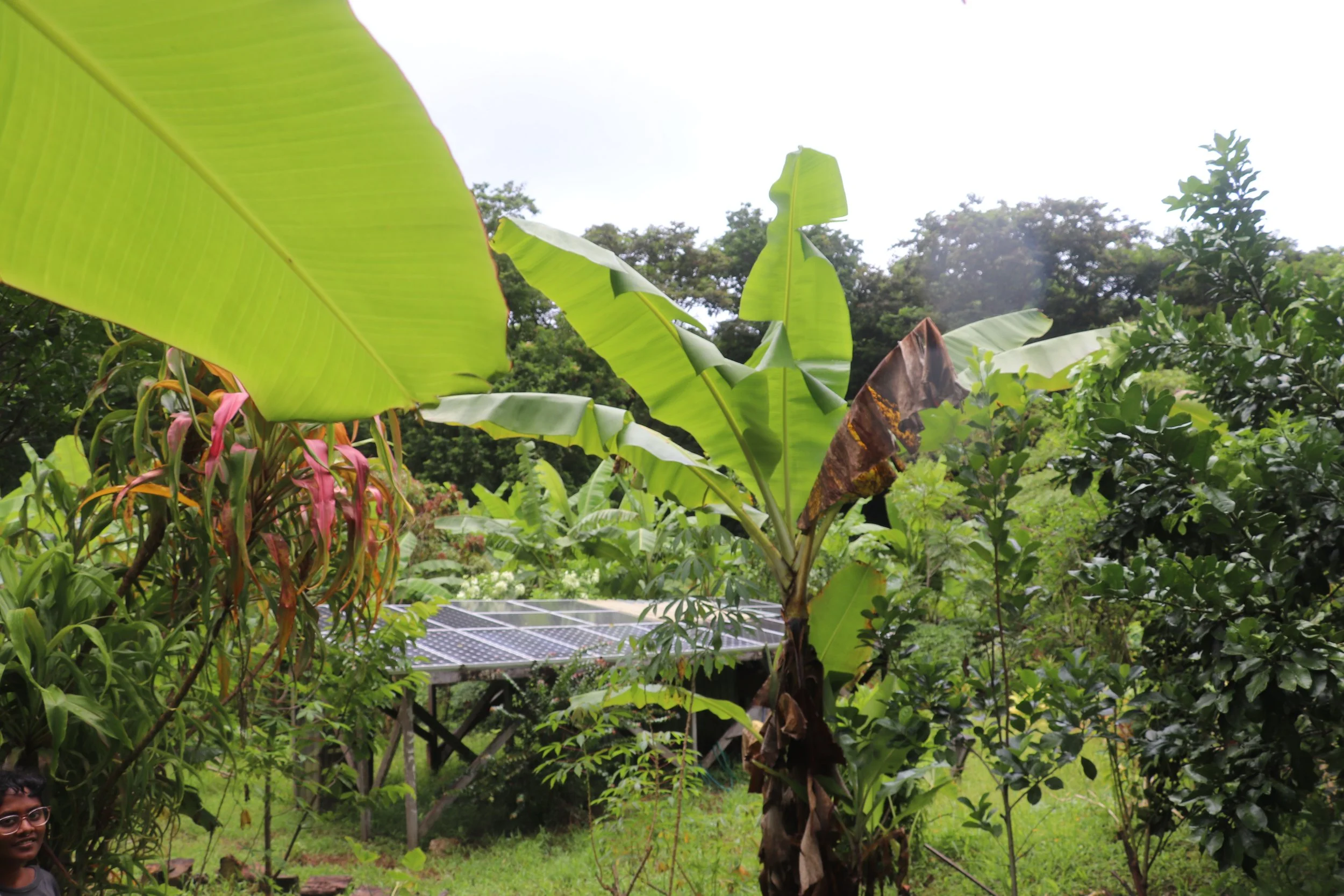
We use a solar array comprising eighteen 300w panels. The hydro power comes through a 1.3 km pipeline issuing from a waterfall 300m in altitude above the ecovillage. In the dry season, solar power is adequate to provide 40kw of power during the day. The hydro gives 18kw per day of steady power, day and night.
Our strategy for power generation is tailored to the conditions of the tropical climate, maintaining a steady supply of power through both the dry and rainy seasons. The ecovillage is wired for energy efficiency, using LED lighting and low voltage appliances throughout.
-
![]()
-
![]()
Central power system
-
![]()
Hydro power system
-
![]()
Power storage batteries
-
![]()
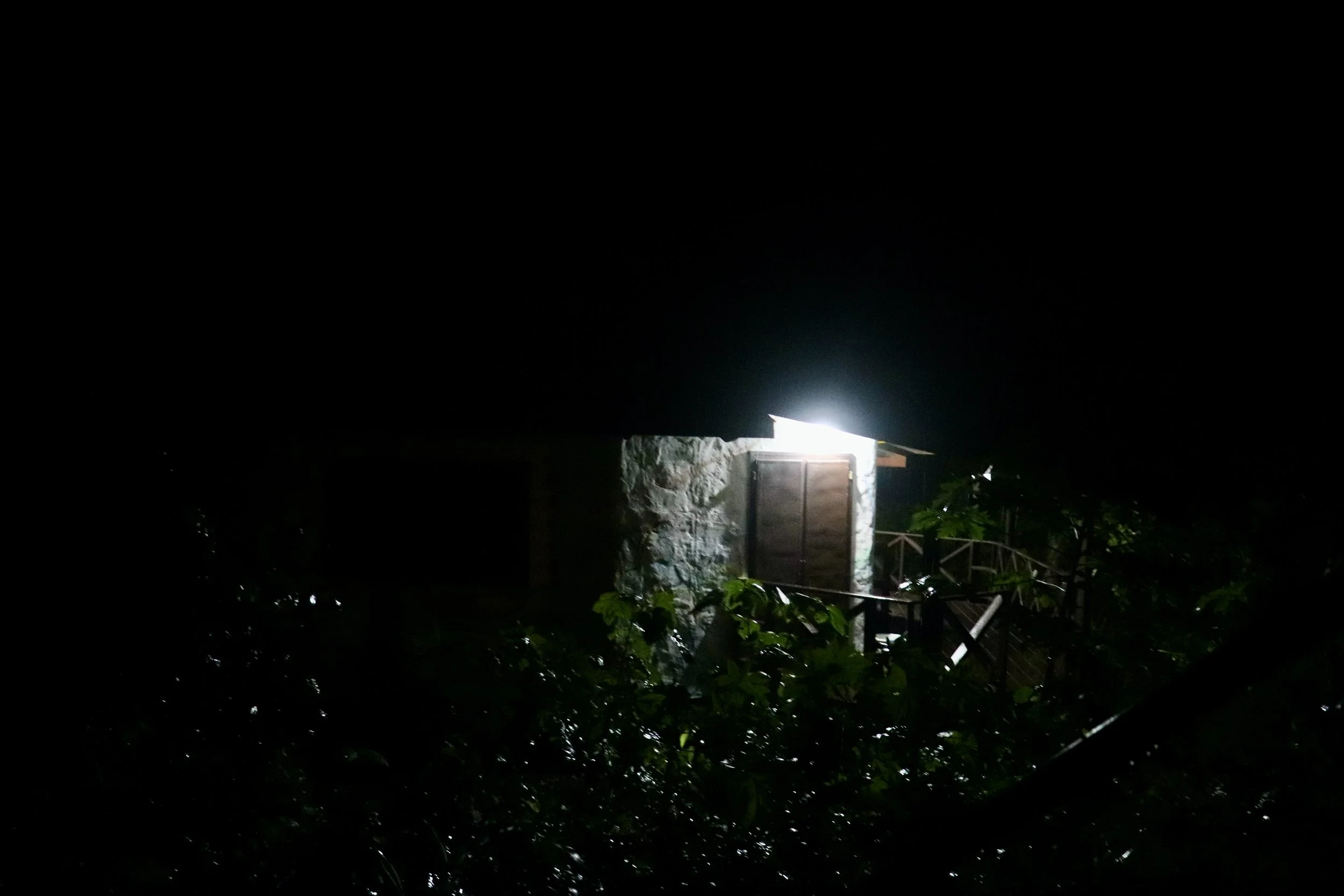
All buildings have power
-
![]()
Our Solar panel grid
-
![]()
Solar panel
↠ agriculture ↞
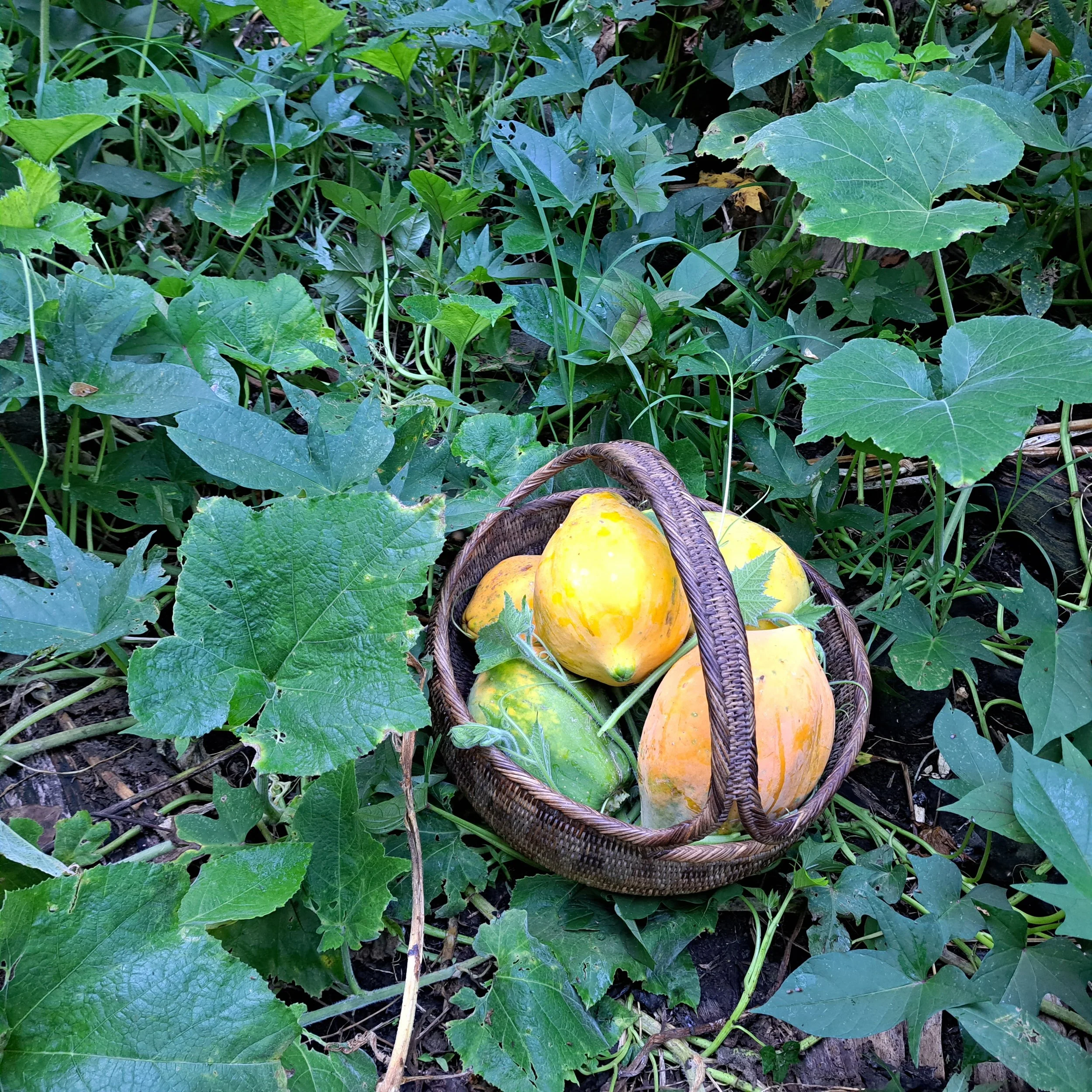
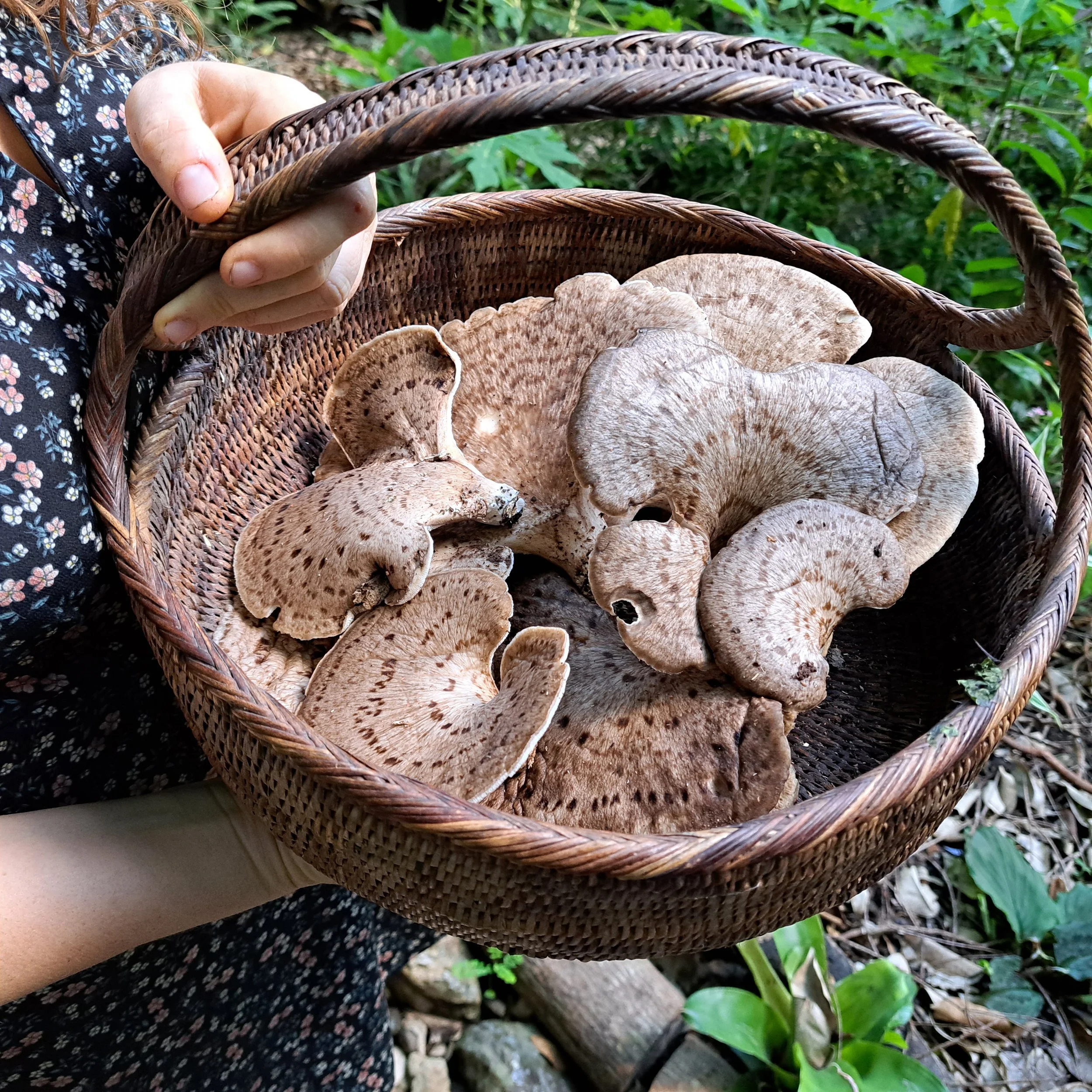
If it is true that you are what you eat, then we are organically grown, freshly harvested, abundant, diverse, and regenerative. That is because our gardens feed us!
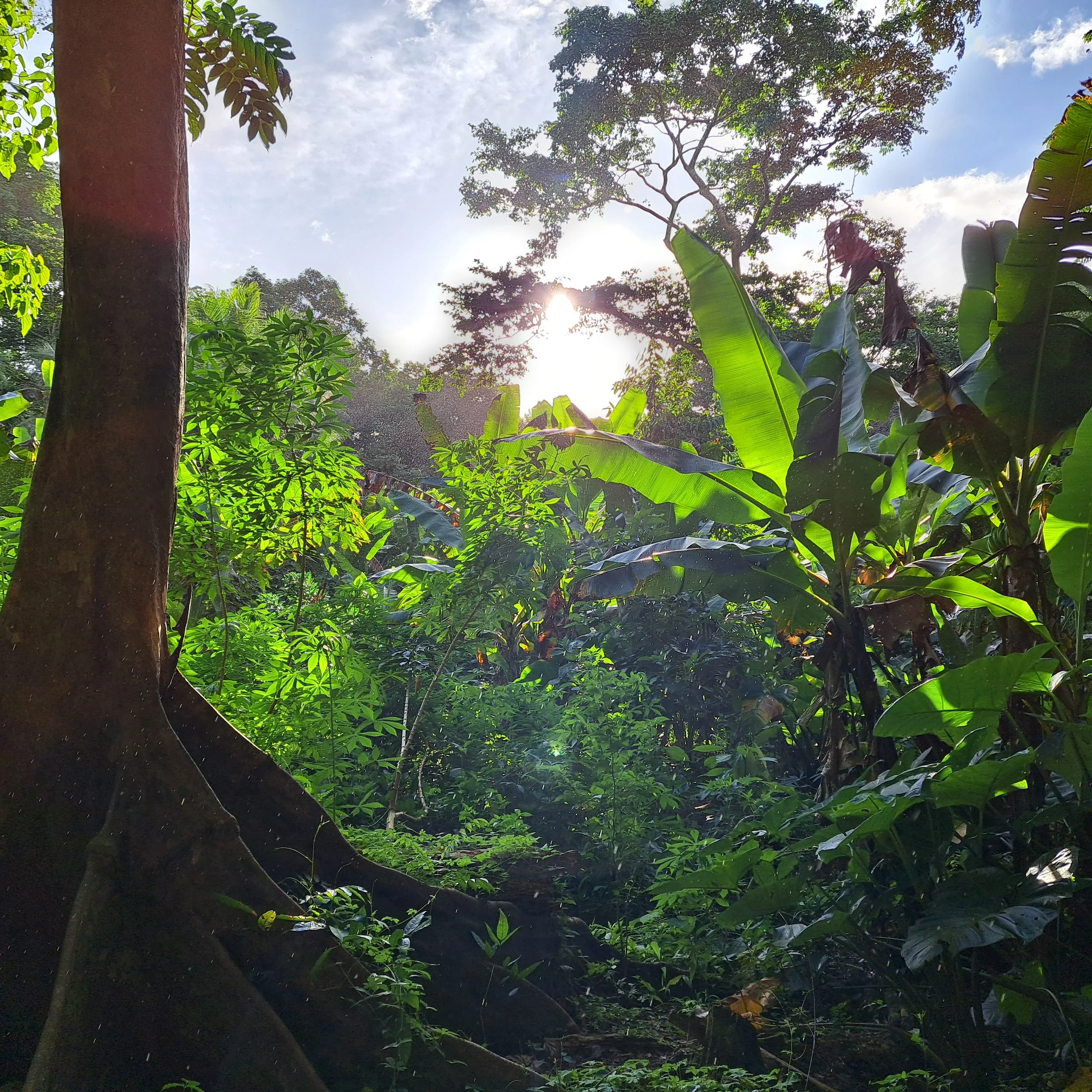
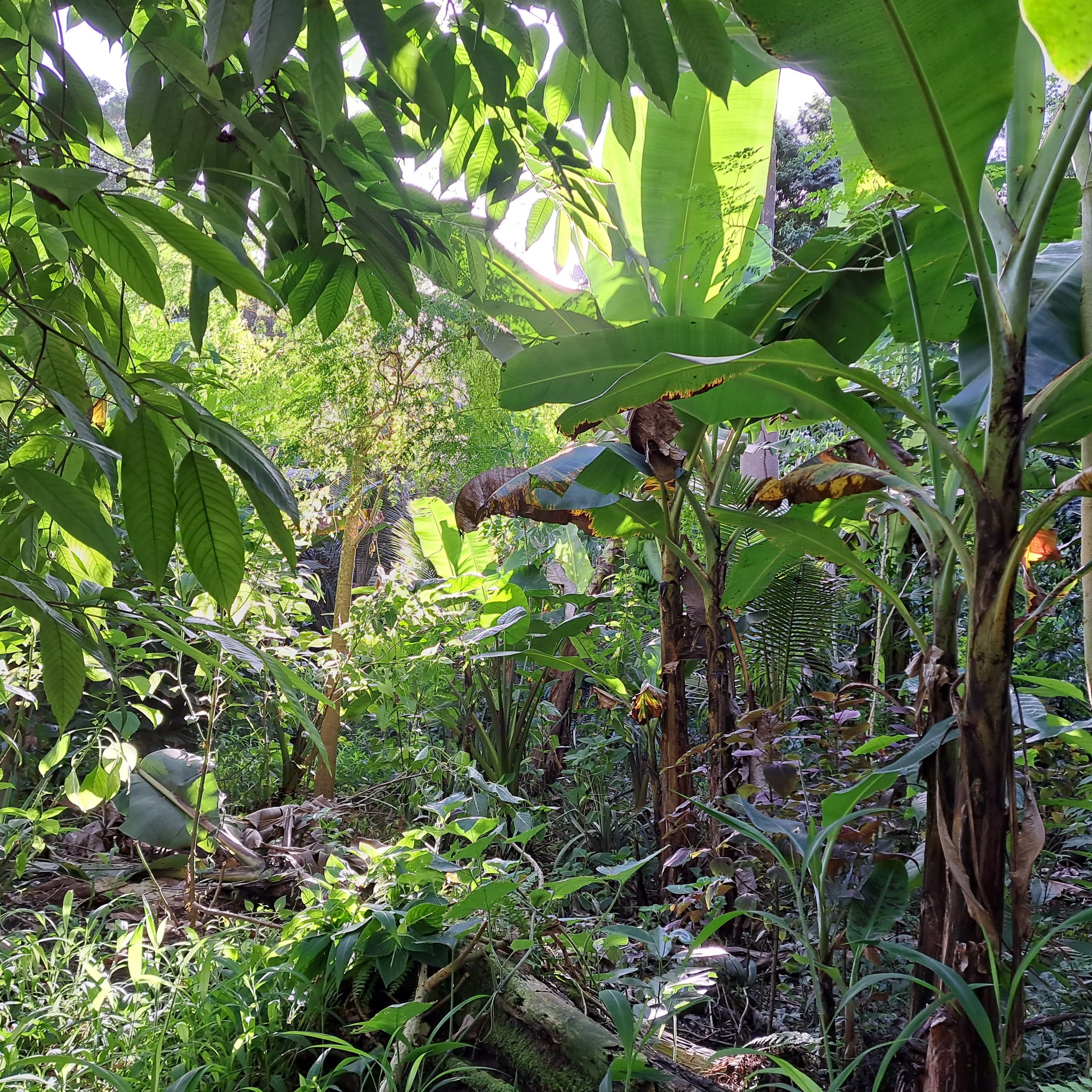
The design of our food forests follows the principles of syntropic agroforestry: densely planted with diverse local food crops such as banana, taro, manioc, aibika, pumpkin and sugar cane, the productive soil ecology feeds orchards of exotic and local tropical fruit tree species.
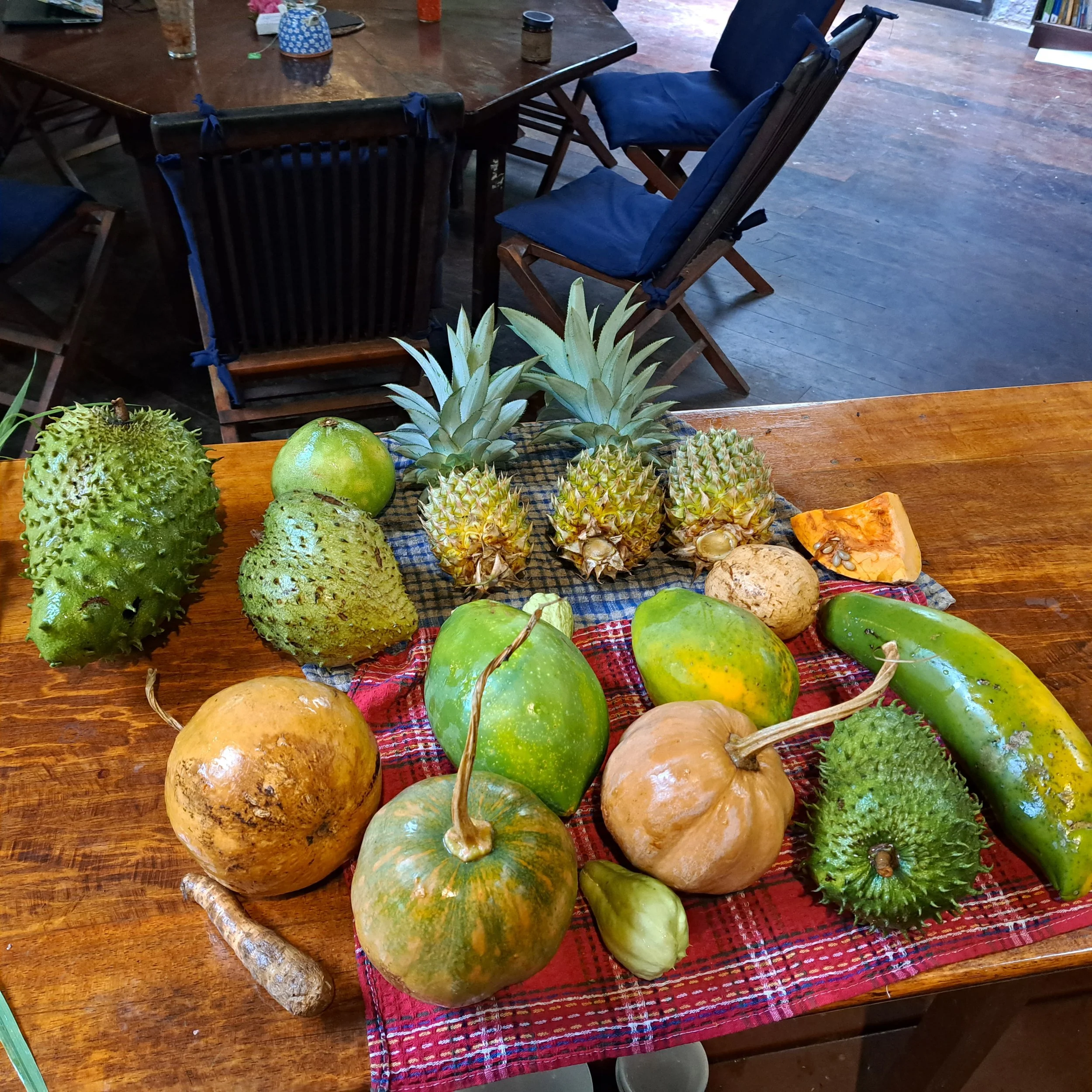
The gardens are filled with fully-grown fruit-bearing trees that provide the community with papaya, avocado, coconuts, cacao, jackfruit, soursop, rollinia, acerola cherry, pomelo, custard apple, lemon, lime and grapefruit in their given season, and many more varieties that have yet to mature.
As time goes by, we aspire towards growing an even greater diversity of crops to feed the community.
-
![]()
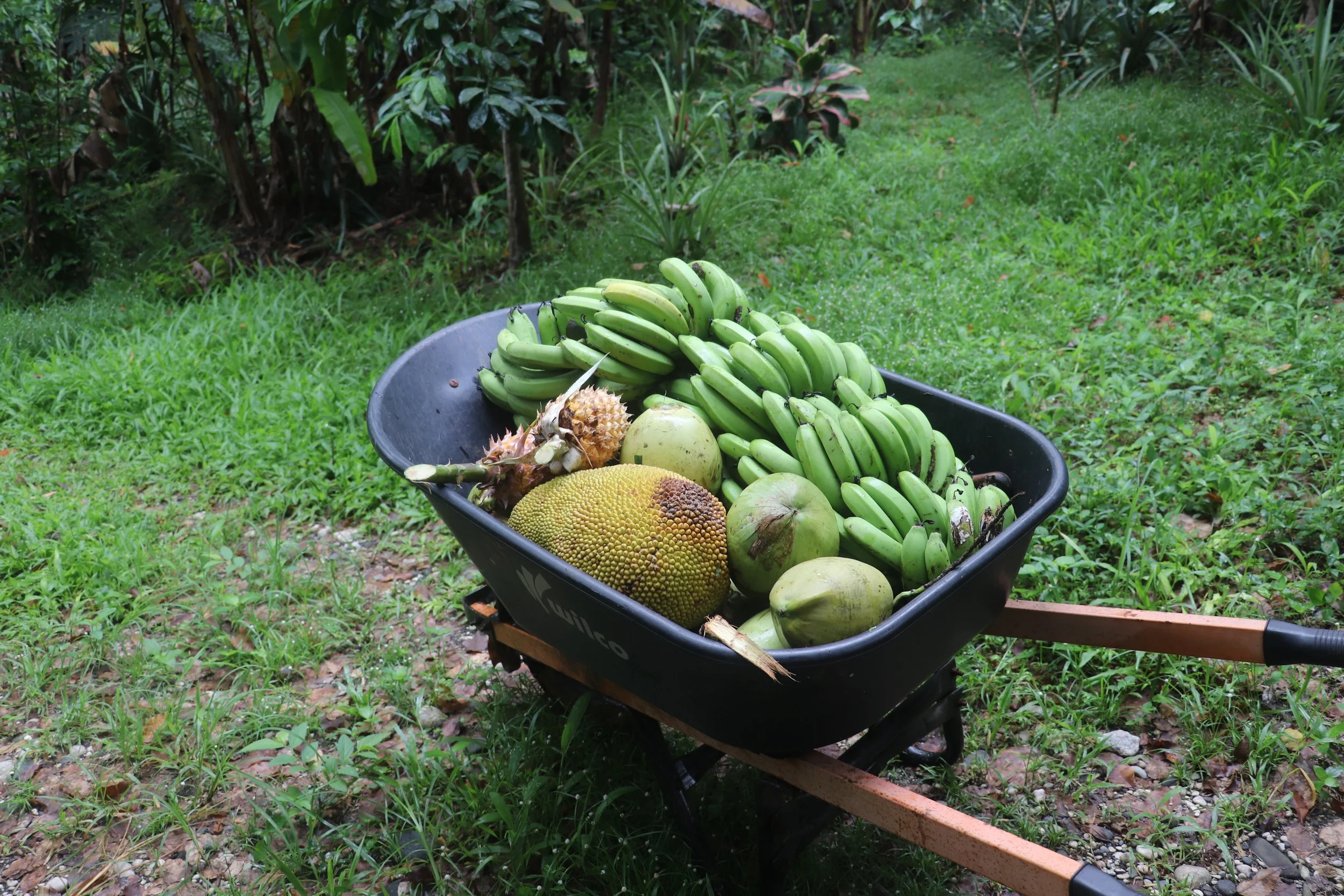
A big harvest from the food forest
-
![]()
Foraged tiger mushrooms
-
![]()
Our fruit gardens
-
![]()
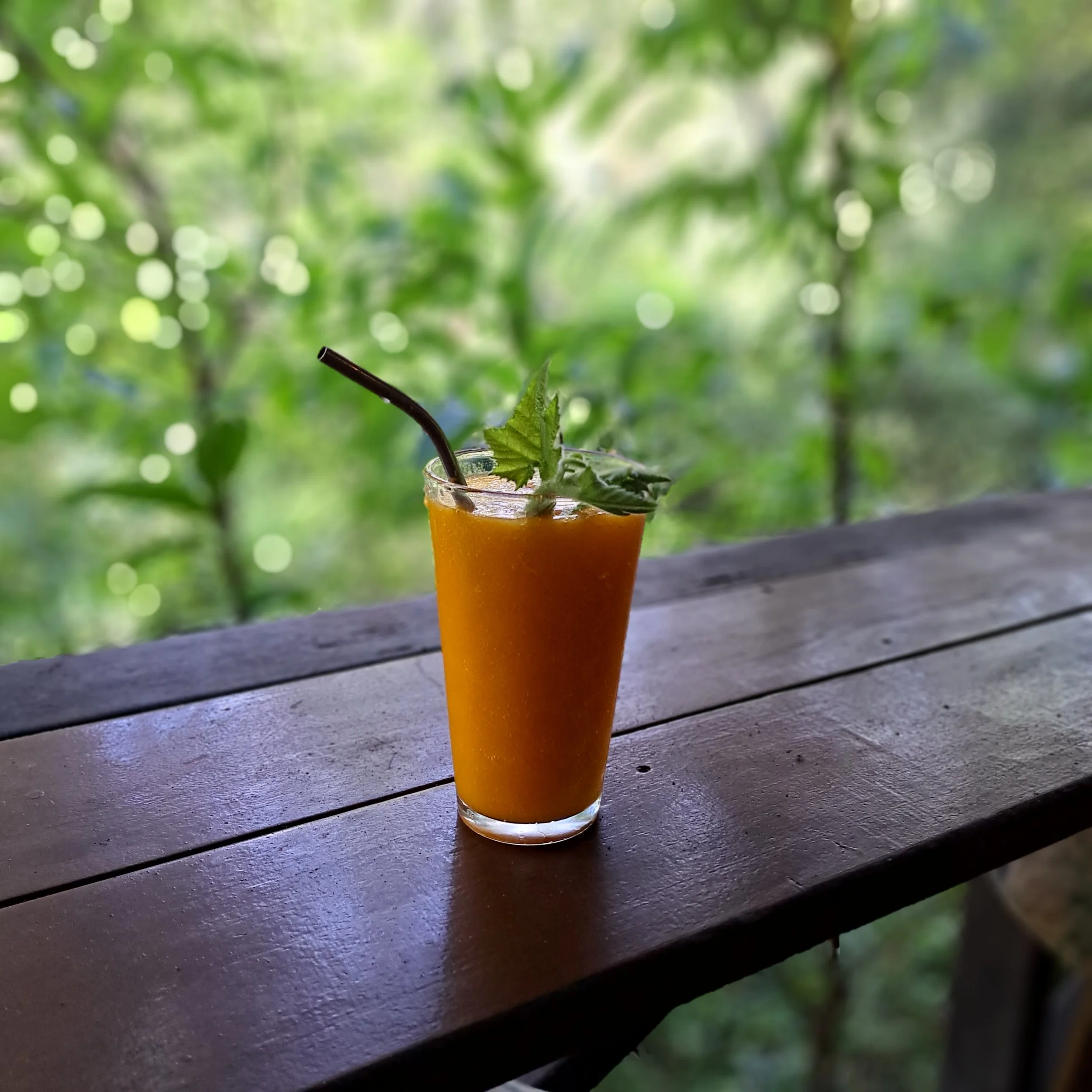
Fresh Papaya smoothie for brekkie
-
![]()
Our handmade open fire stove
-
![]()
Cooking on open fire stove
-
![]()
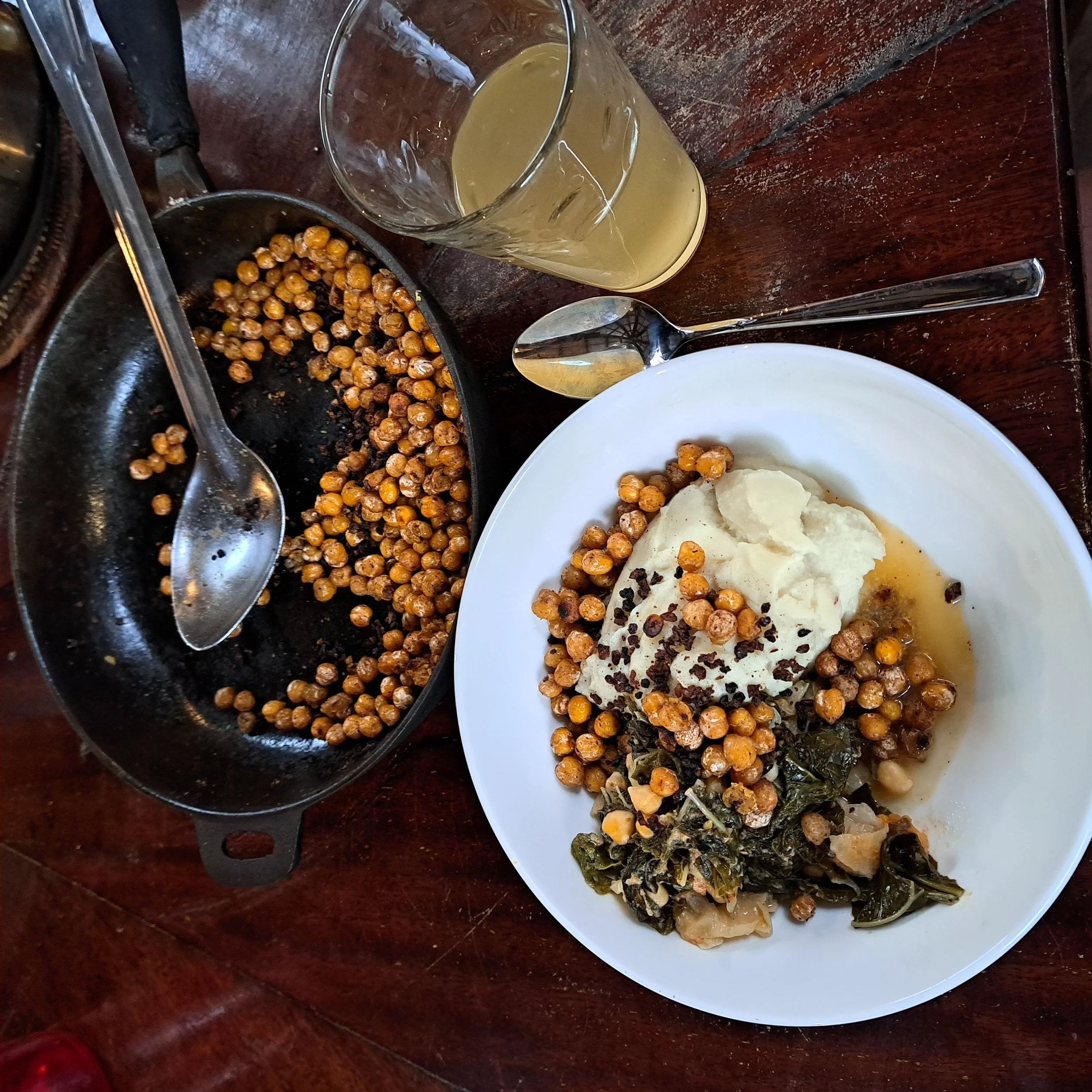
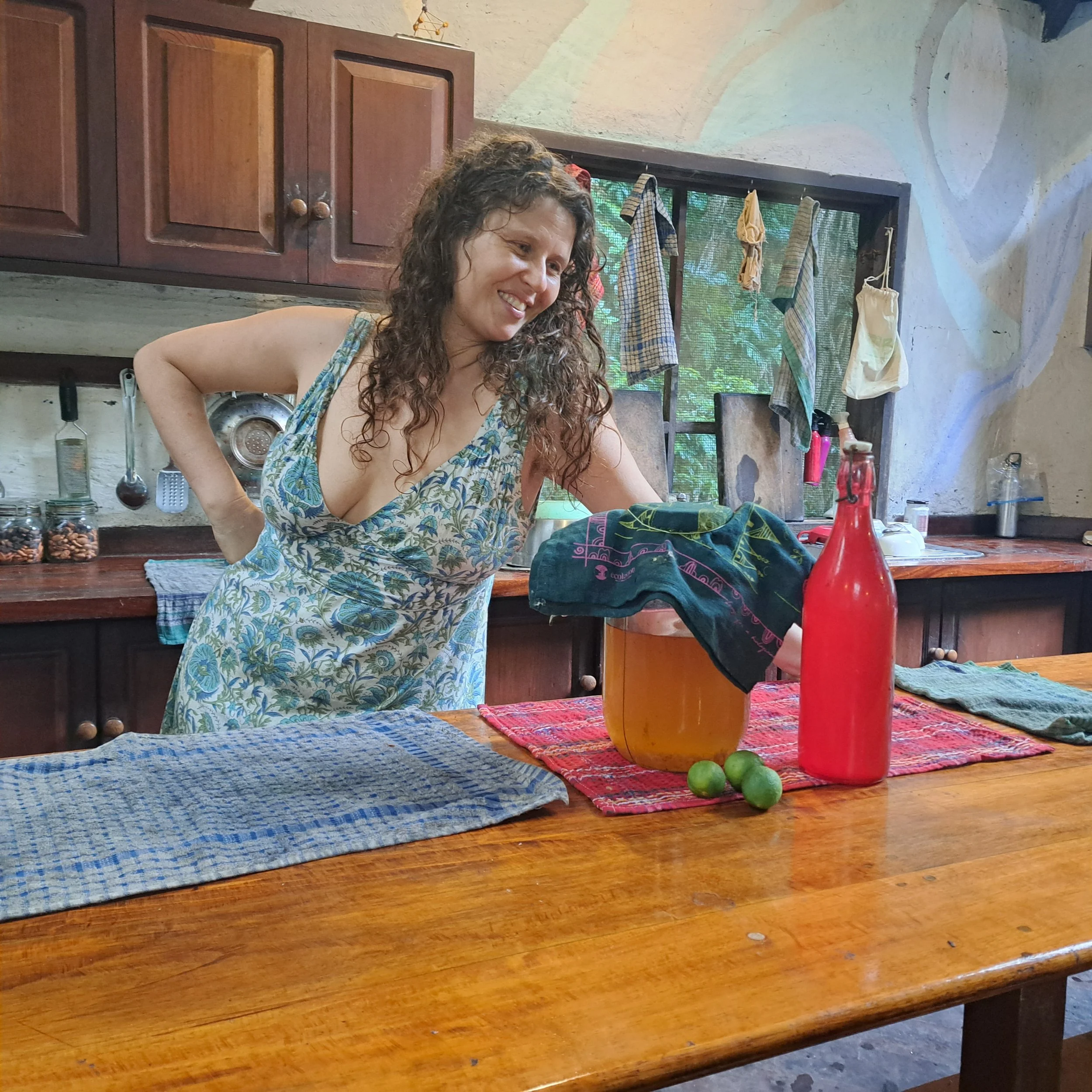
A regular meal at Edenhope looks like this. Also we brew water keffire
-
![]()
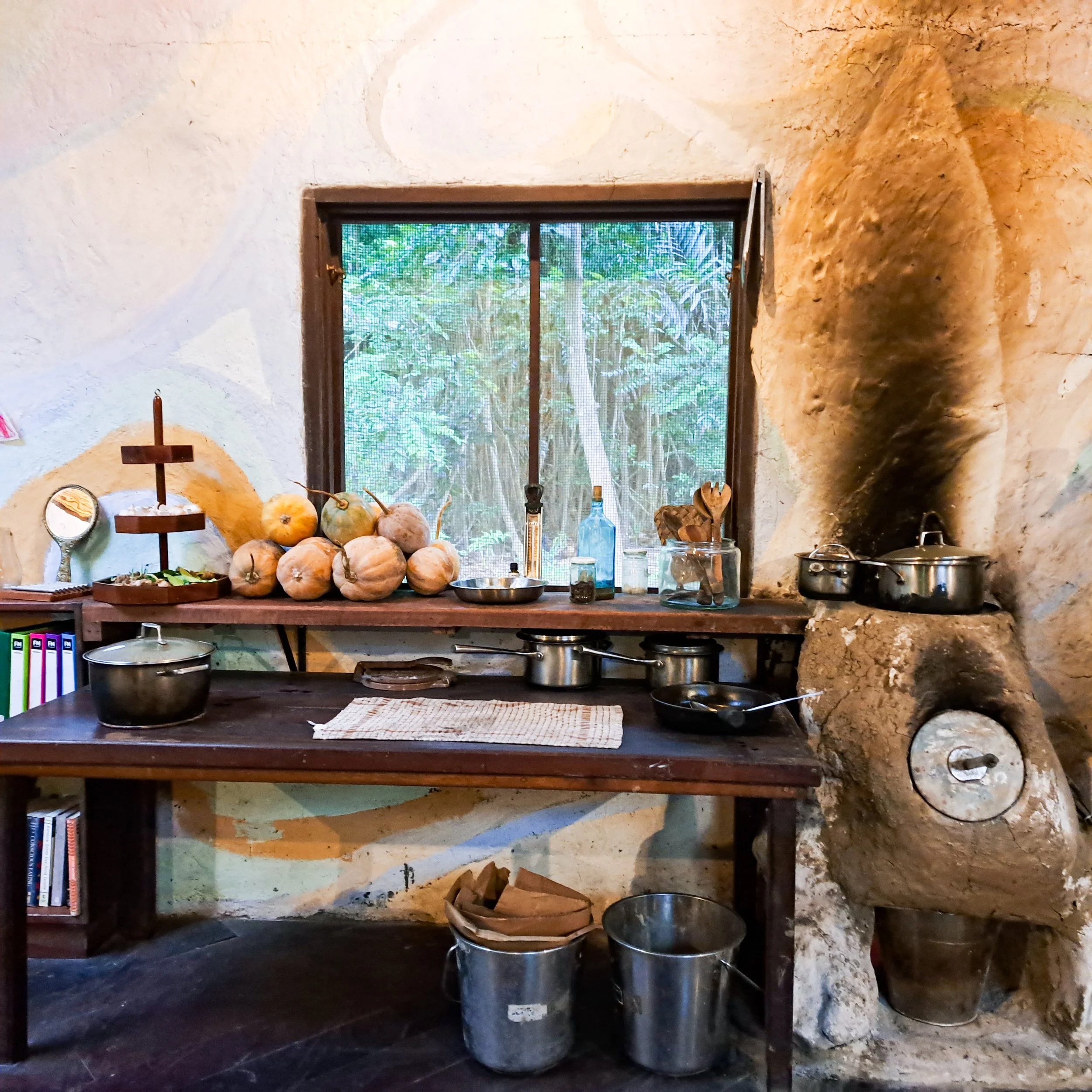
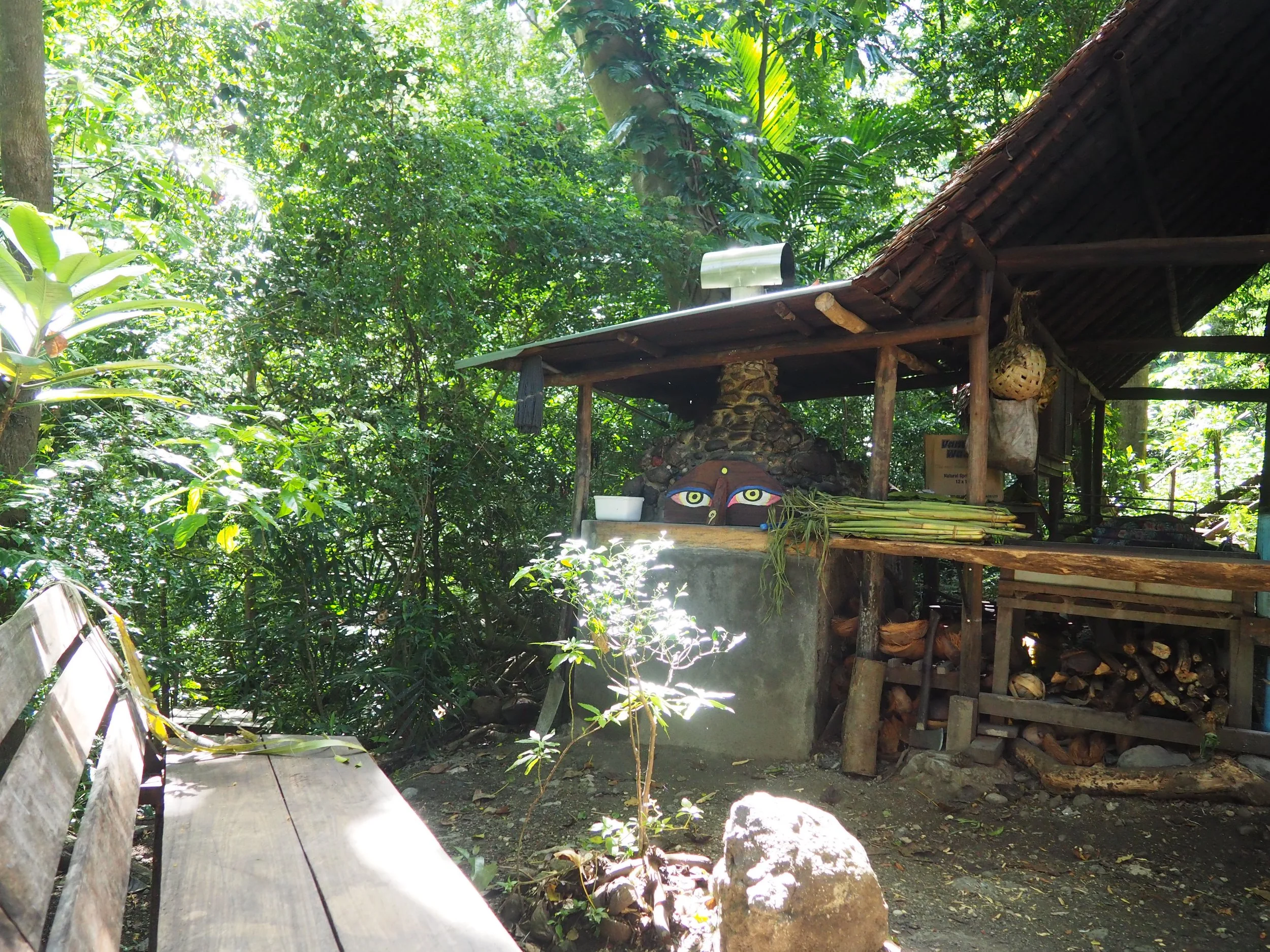
This is our bush kitchen looks like. There we have a wood pizza oven too
-
![]()
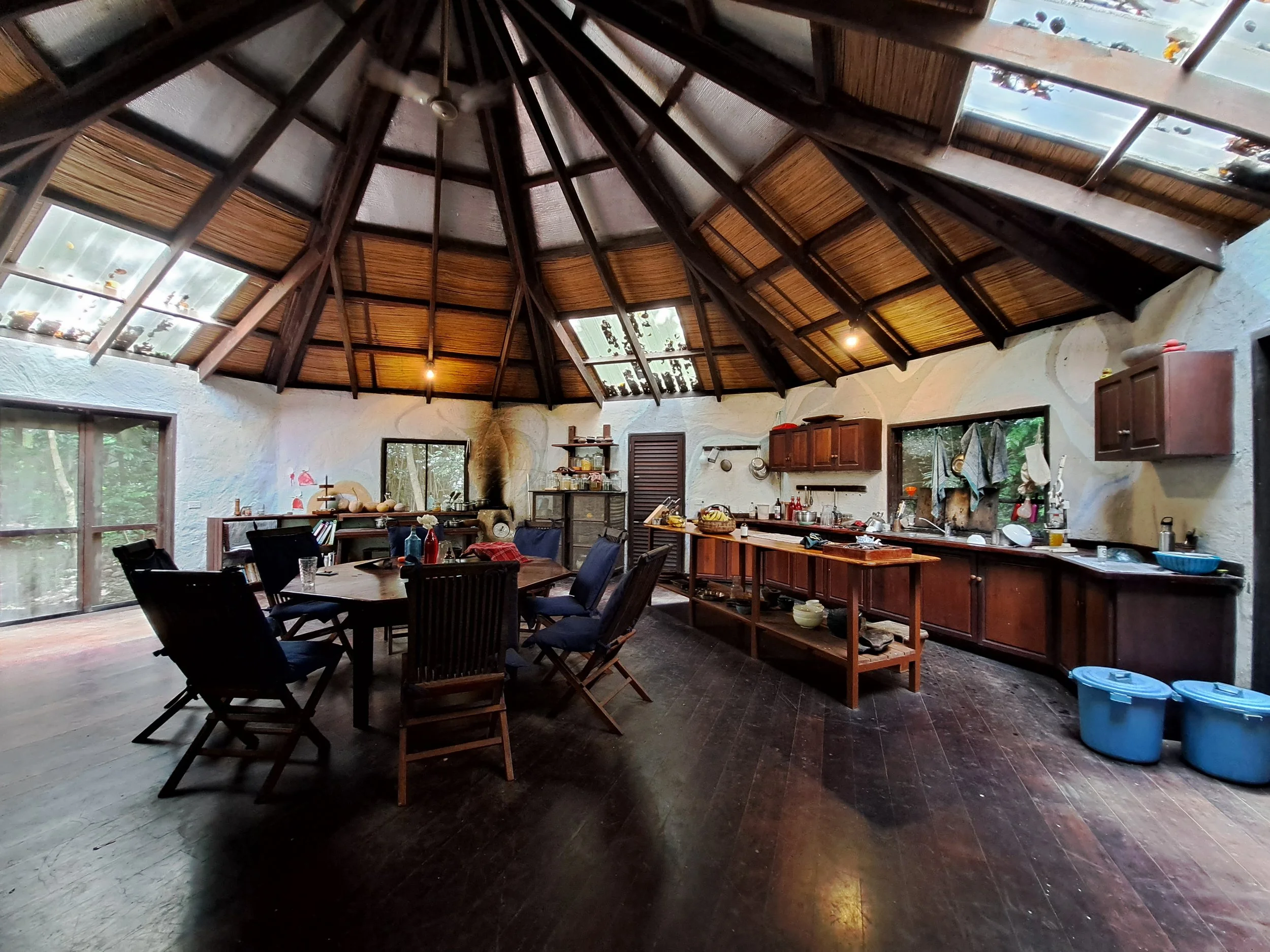
Our kitchen and dinning hall
-
![]()
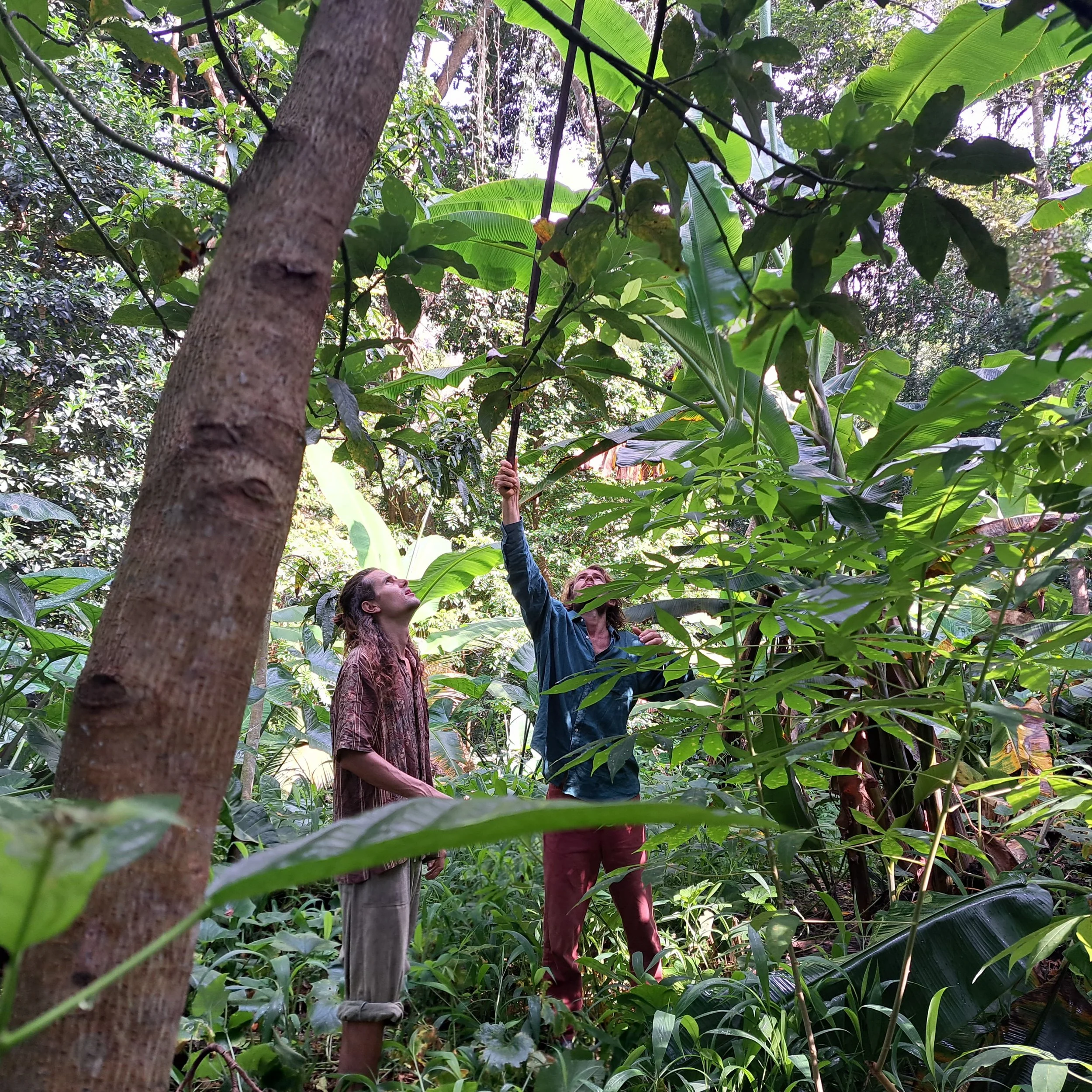
Papaya harvesting
-
![]()
Abundance of food in our gardens
-
![]()
Our food gardens
-
![]()
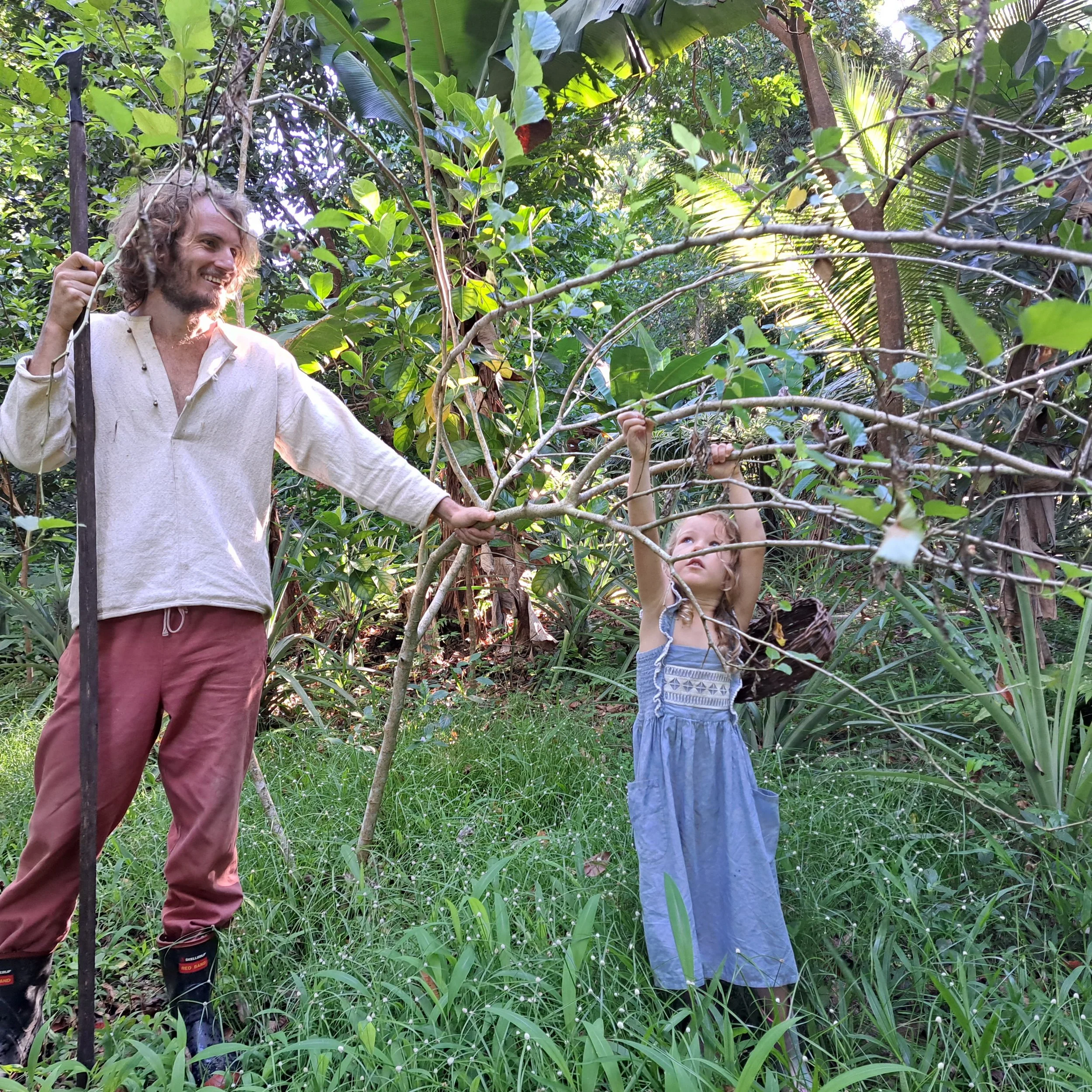
Wild berry harvesting
-
![]()
Harvesting Avocado
-
![]()
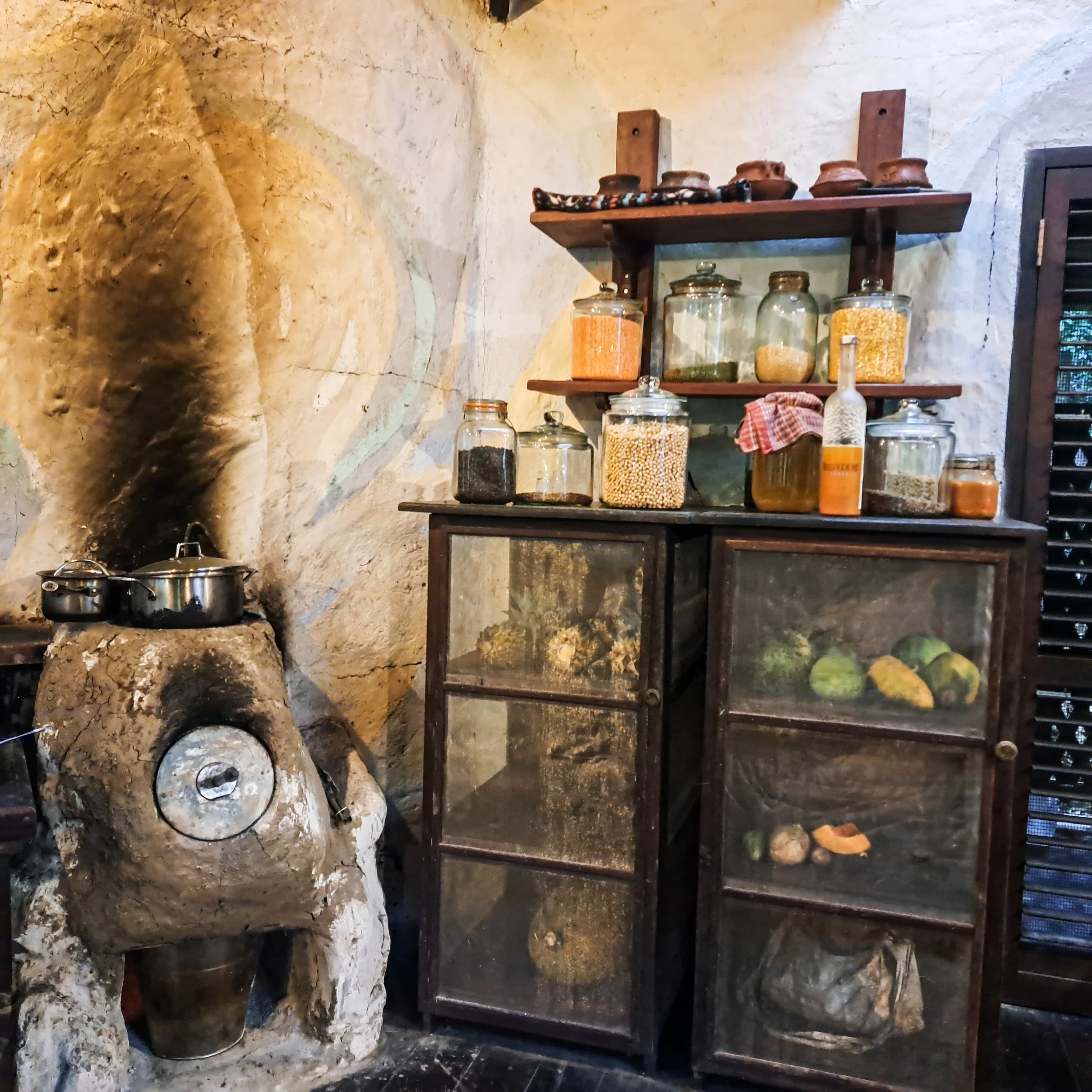
Our fully stocked kitchen
-
![]()
Cooking in an open fire stove makes food even more delicious
-
![]()
We are experts of fermented drinks
↞ waste ↠
Taking a conscious approach to waste management and minimization is a vital part of the ecovillage experience. All of the systems we have in place to deal with waste come from our earnest wish not to cause harm to the earth. There are a few different aspects involved in our approach.
↠ Avoidance of chemicals
As much as we would love for everything to be organic, the reality of off-grid living is that it a few gnarly chemicals are required to maintain the infrastructure and systems we have in place (for example, engine fuel and mold-resistant decking oil).
Beyond this, we do not bring any chemicals such as bleach or pesticides into the ecovillage, as there is no way to dispose of such things without harming our rainforest ecosystem. We make all of our soap from coconut oil and our toothpaste from natural minerals.
↠ Composting
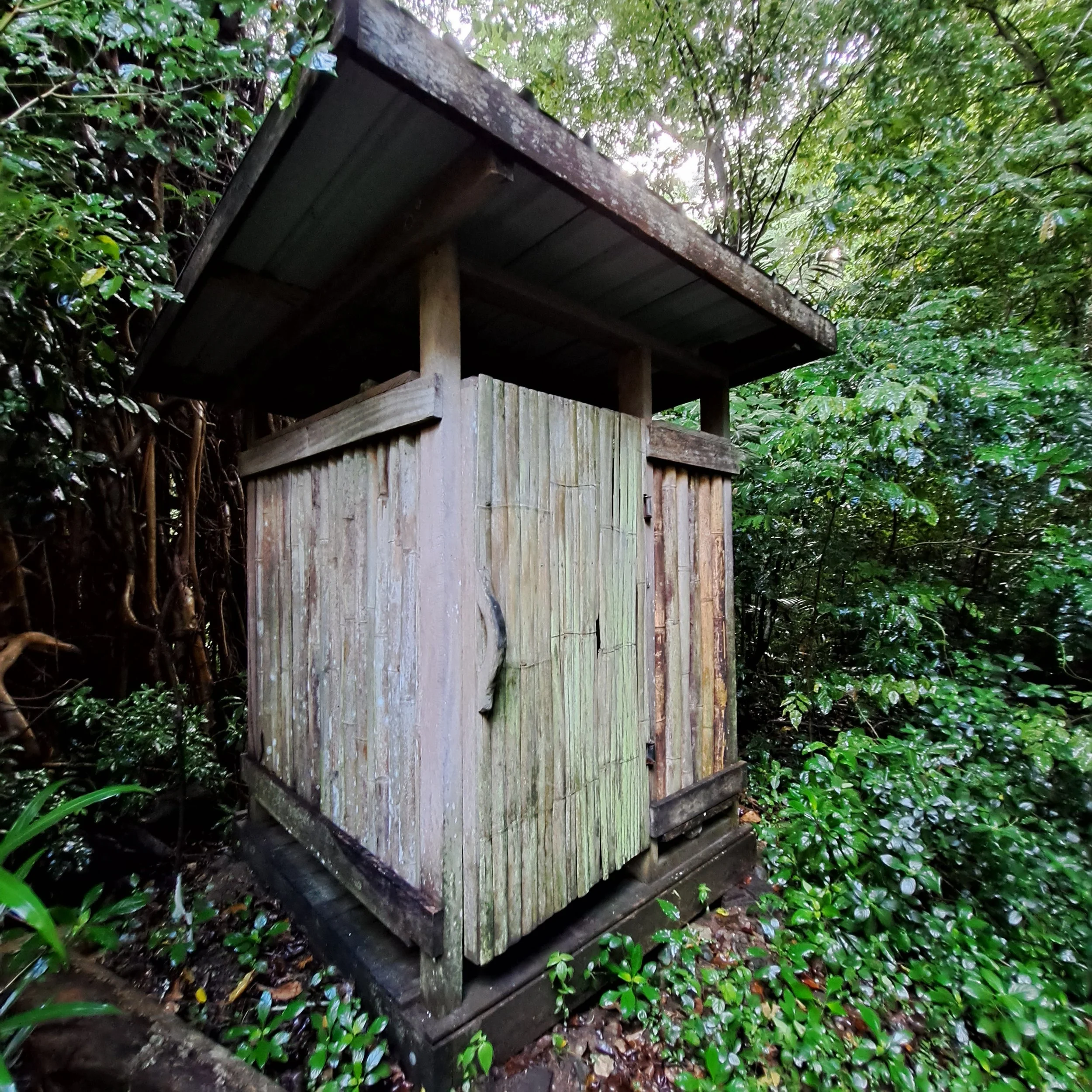
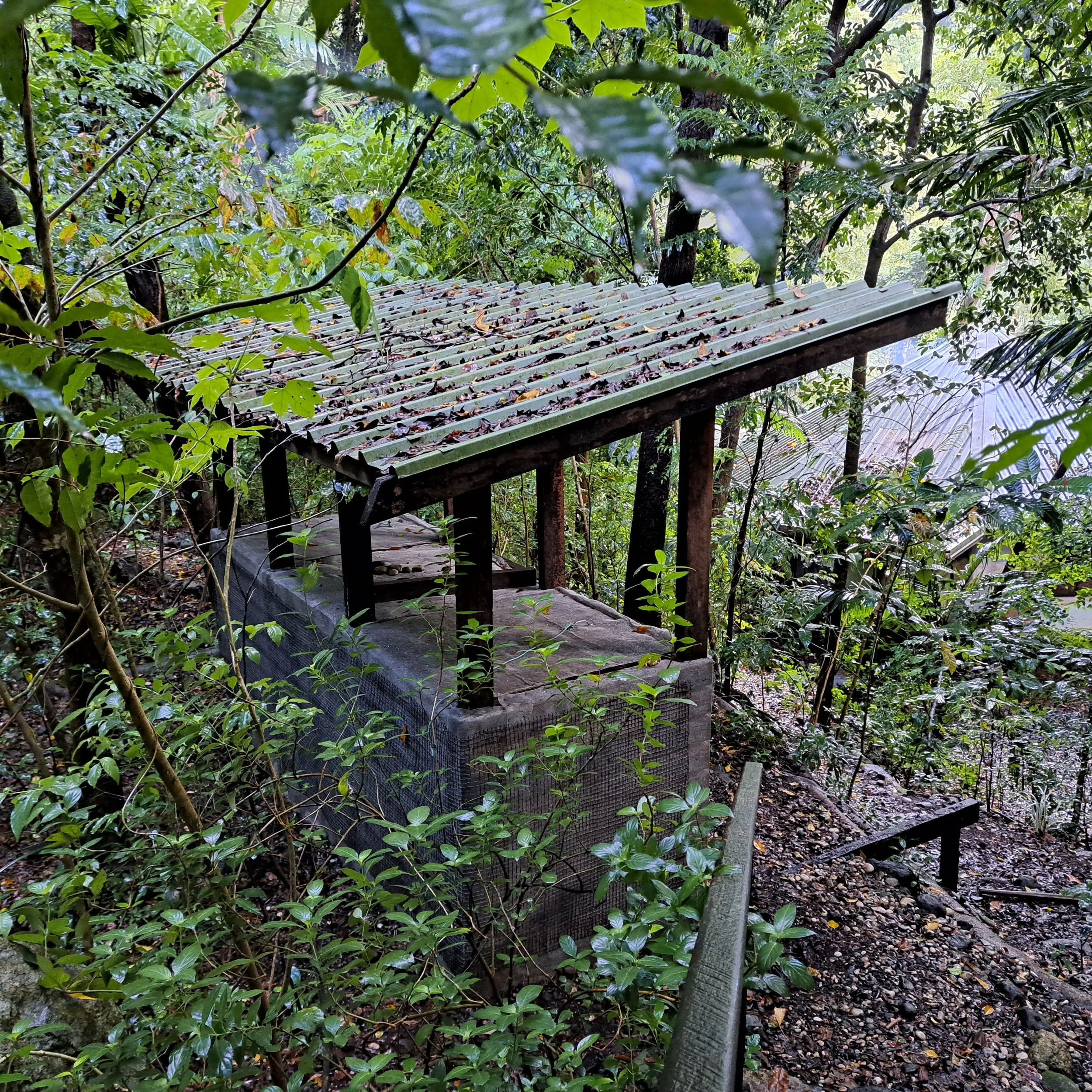
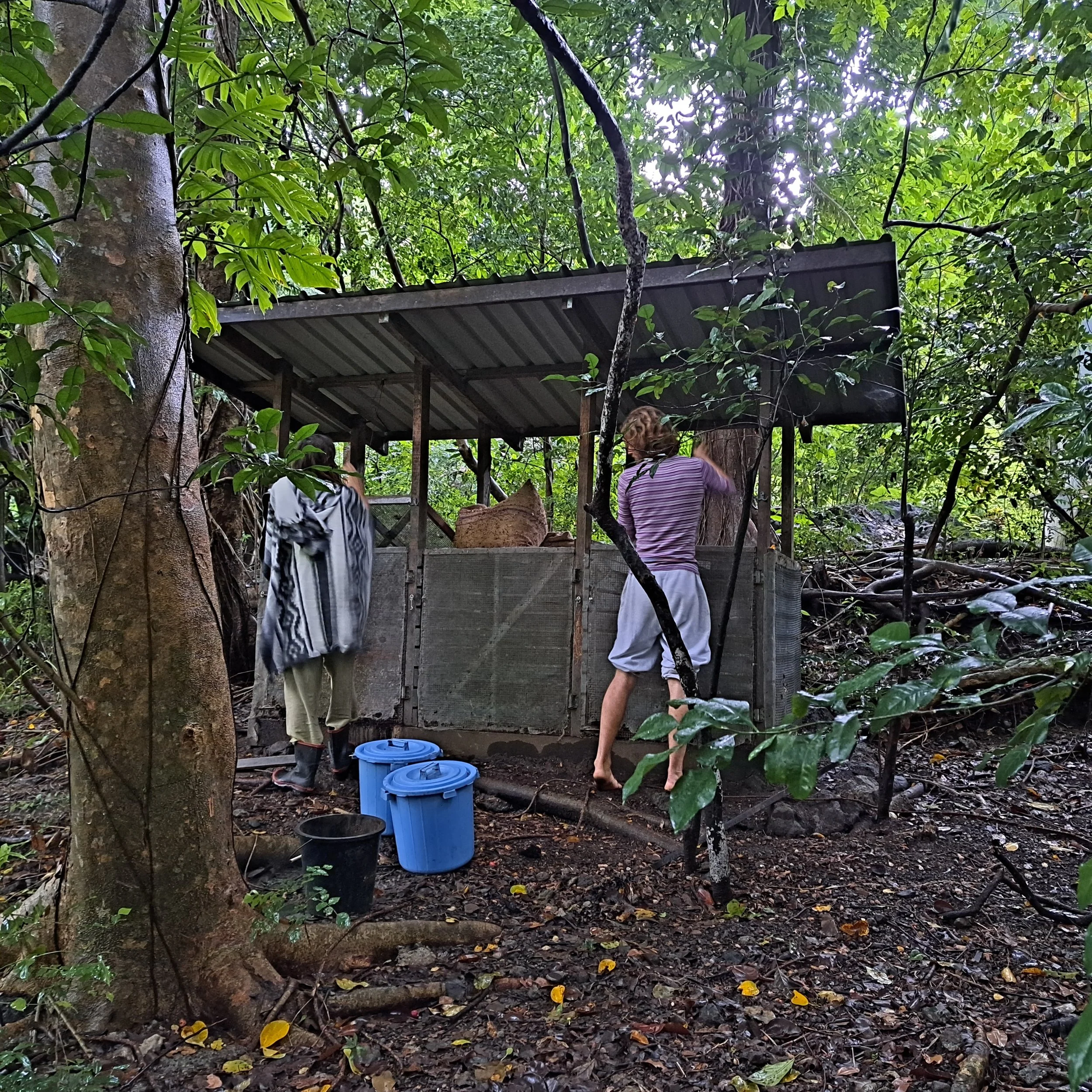
All food waste is composted, and so is humanure (that is, human poo). Composted materials are left to mature for a year in purpose-built haciendas to ensure no harmful pathogens enter our soil. The compost then enriches the soil that grows our food. Simple and effective.
↠ Fixing and repurposing
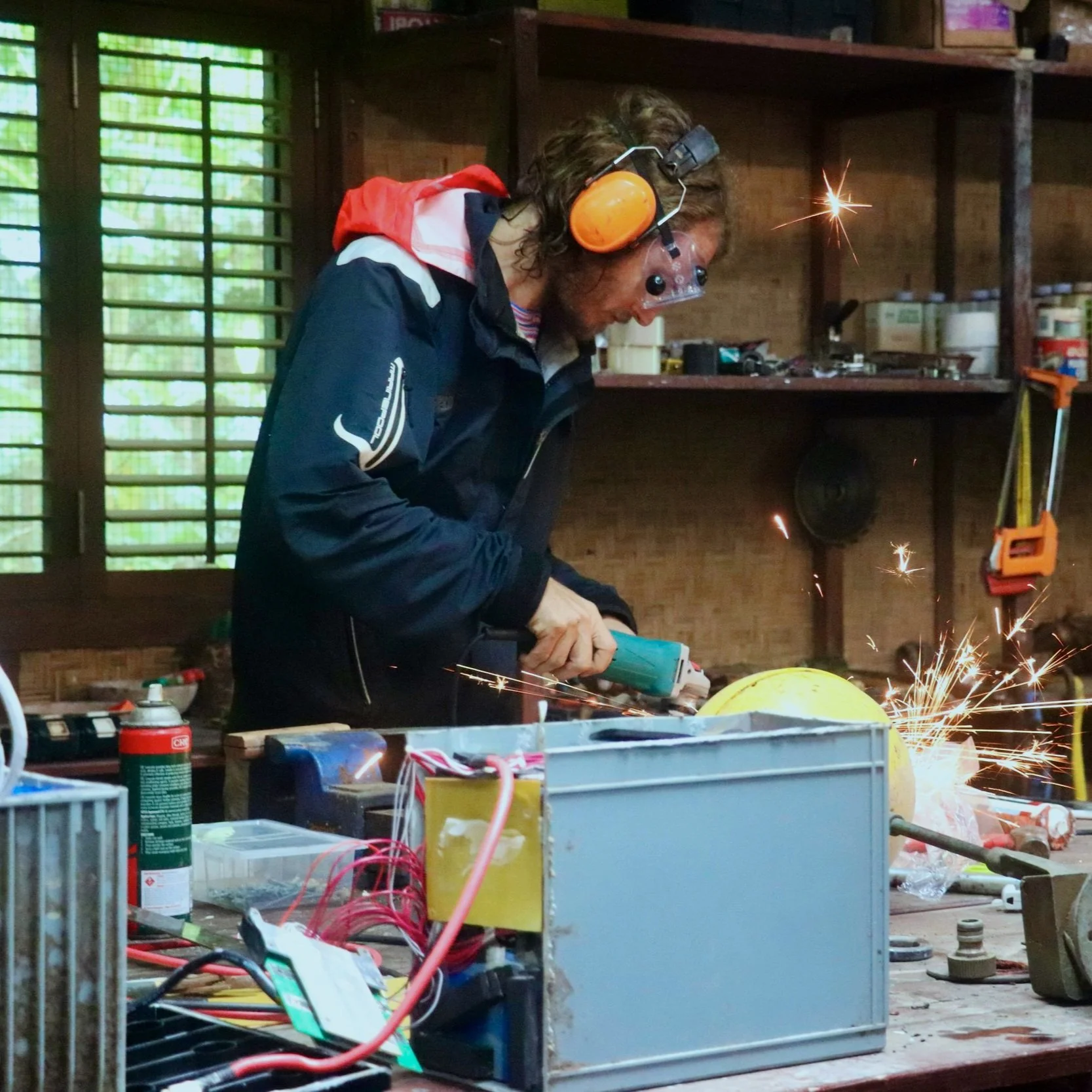
We bring stuff here. We use things. They break. What next? We make an effort to repair and re-use everything that we have, including broken equipment and machinery: the old satellite dish becomes the roof of a sauna, a broken washing machine drum is transformed into a water filter, batteries from the old drill are welded into a new bank.
It takes ingenuity to bring new life to old things, but by fixing what we have we enhance the lifespan of our tools and technologies. We owe a debt of thanks to the busy tinkerers of YouTube for helping us to figure out what to do with old circuit boards and wires!
↠ Incineration & transportation
As there is no recycling facility on this island, the best solution that we could come up with for plastic waste is to incinerate it in an old fuel drum and then transport the remains to the landfill in town. We decided on this process as an alternative to digging our own landfill which would impact the ecology of the surrounding old-growth rainforest.
-
![]()
Composting haciendas
-
![]()
Composting
-
![]()
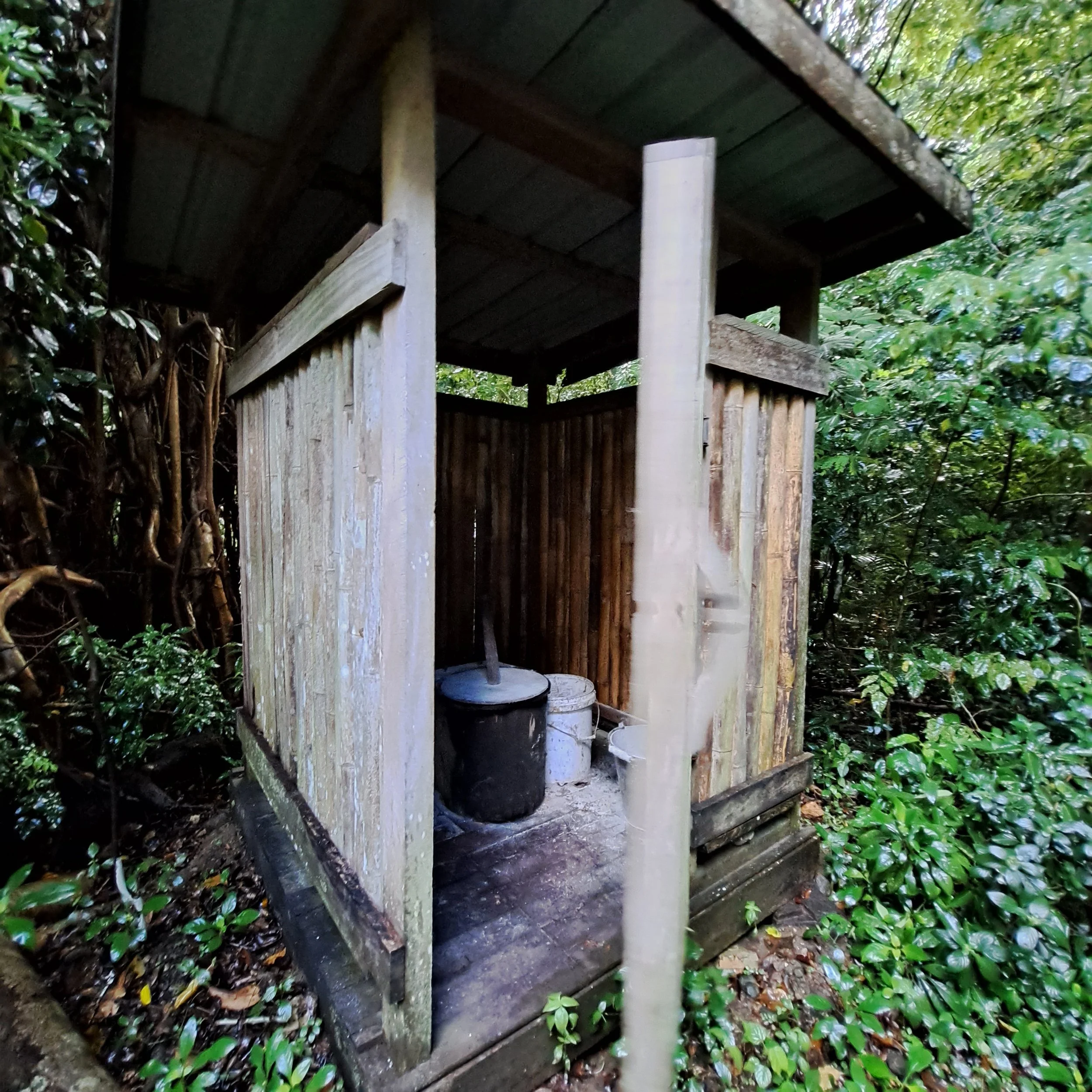
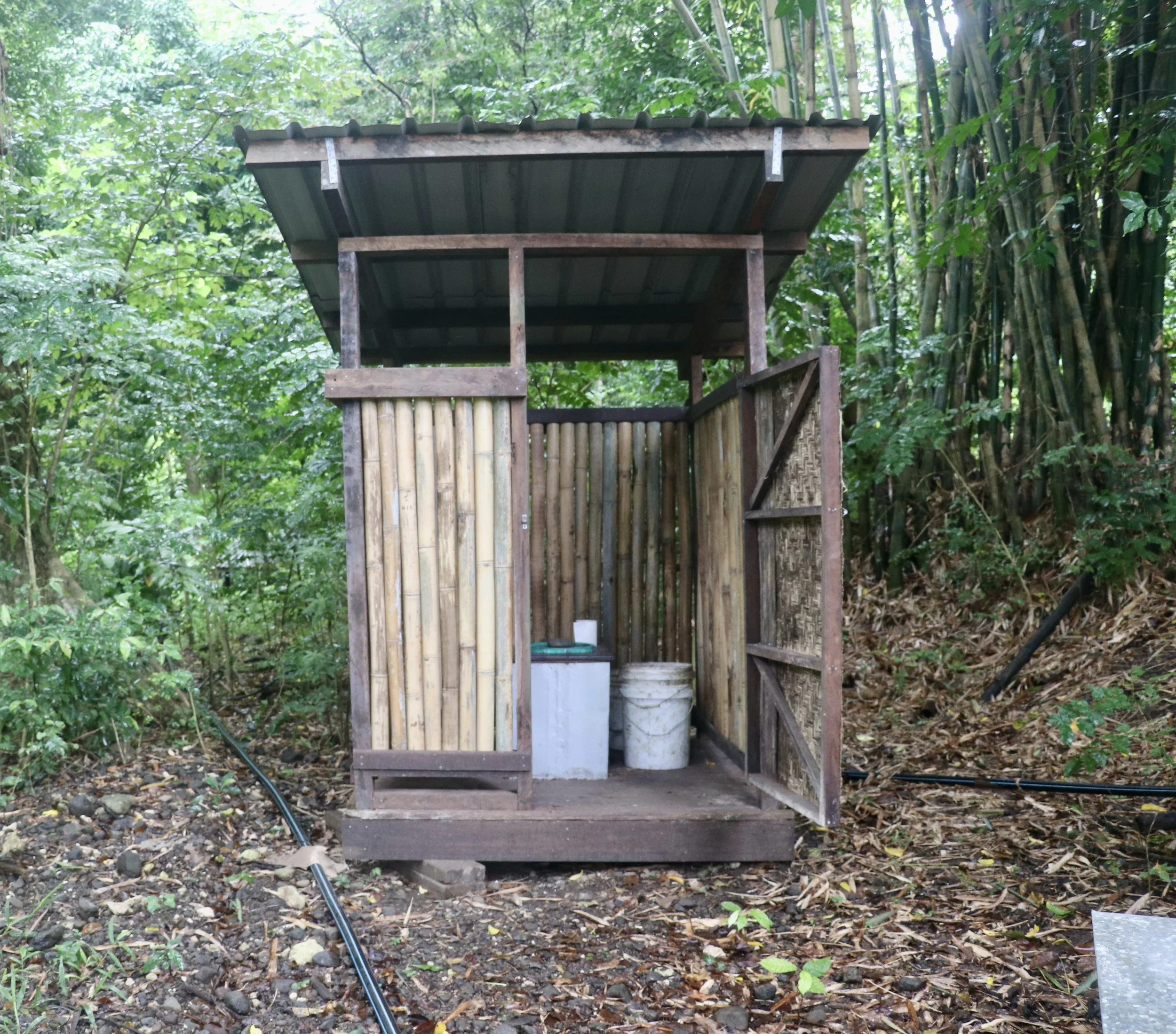
We have several compost toilets around the eco-village
-
![]()
Food scraps composting
-
![]()
Composting toilet


↞ vehicles ↠
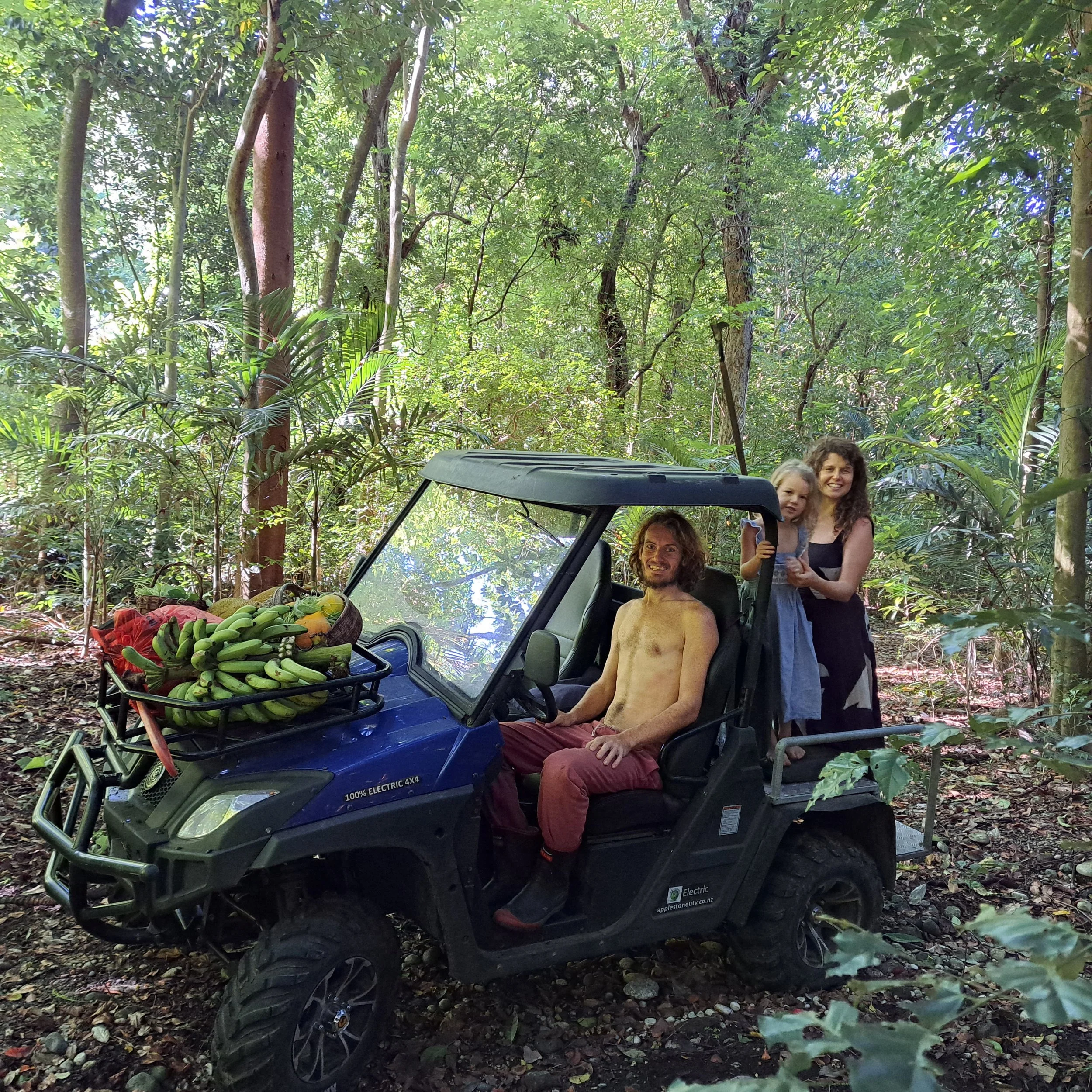
Edenhope Nature Preserve is extremely remote. Our vehicles are a vital component of the ecovillage setup, as they enable us to transport visitors safely and speedily from the town of Luganville.
Our boat, Daphne, is a Lazercraft Divemaster — made in New Zealand with a hard-wearing hull that can steer passengers safely along the rugged coastline of Western Santo. Fitted with a 90hp motor, our boat can make the trip to Luganville in around 2 hours in good sea conditions and can seat up to five passengers.
We also have two Applestone Electric ATVs as transportation along the 9km service road that connects Edenhope Nature Preserve to the nearest village along the West Coast. Note that this stretch of road is the only road constructed on this side of the island; we maintain and repair it annually, because the road is highly prone to cyclone damage.
The ATVs — Greenie and Bluey — run on lithium ion batteries which we charge on the off-grid power system. Maitri performs all the servicing and maintenance of these vehicles, as they are literally our lifeline. The use of of all our vehicles is contingent on prevailing environmental conditions: we cannot travel when the road is flooded, and we only use the boat when the sea is safe for travel.